When a family home is cleared, the Oriental rugs are often the hardest things to decide about. One may be a valuable antique, another a machine-made copy, and from across the room they can look much the same. Before you clean, sell, divide or give away an inherited rug, a few simple steps protect both the rug and its value. This guide is for families settling an estate in Cambridge, Boston and the surrounding towns.
1. Don't clean or repair it yet
It is tempting to shampoo an old rug before showing it to anyone. Don't. Home carpet cleaners and harsh detergents can make dyes run, shrink the foundation, and leave residue in the wool. Condition also matters when a rug is valued, and a careful appraiser wants to see the rug as it is.
Until you know what you have:
- Keep it dry. Damp basements and garages invite mildew and rot.
- Roll it, don't fold it. Folding cracks the foundation along the creases.
- Wrap it in breathable cotton, not plastic, which traps moisture.
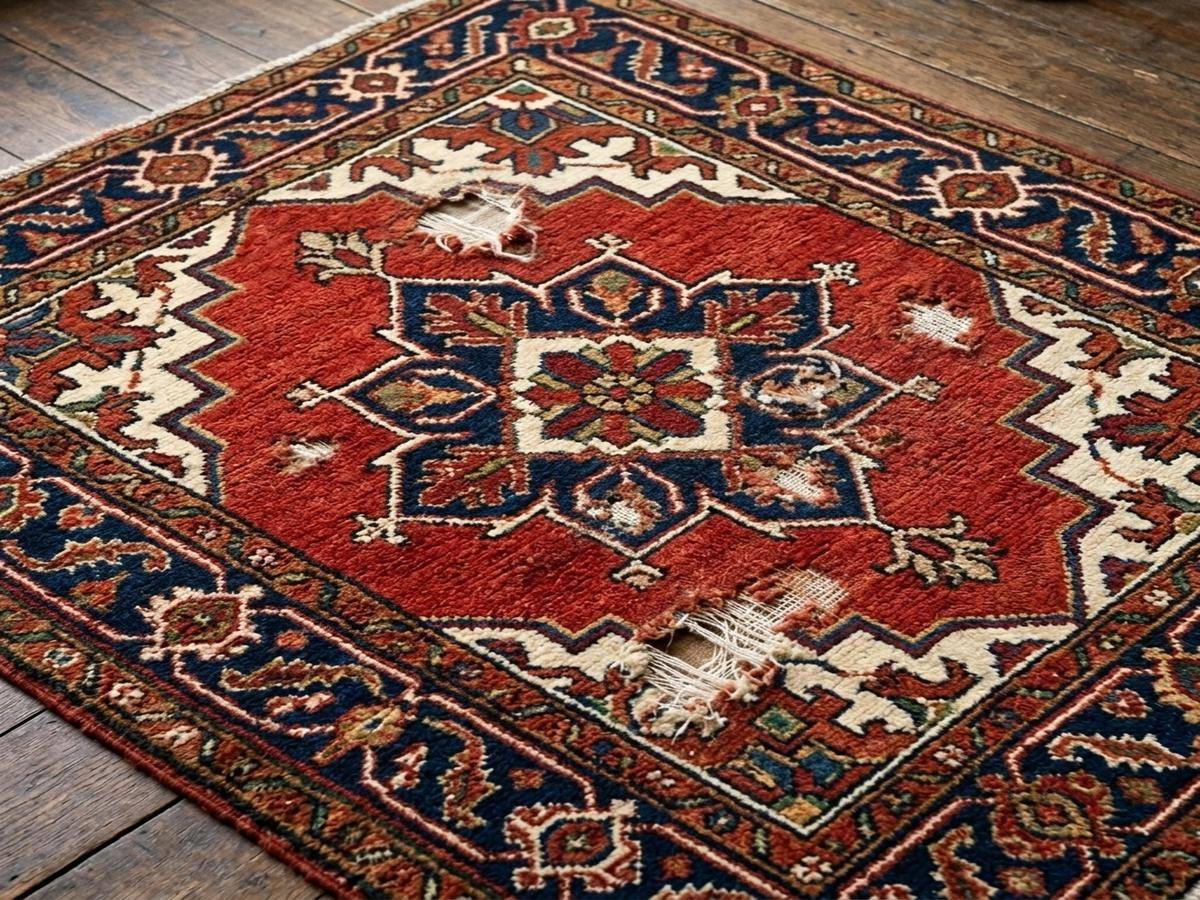
- Check for moths. Look on the back and under furniture for bare patches, small holes or loose wool. Moths do the most damage in rugs that sit undisturbed.
2. Write down what you have
Before anything leaves the house, make a simple record of each rug:
- Photos of the front, the back, all four corners, both ends and any damage.
- The size, measured in feet and inches along both sides.
- Any labels, tags or old receipts, and any earlier appraisals or insurance schedules.
- Where it lay in the house and what the family remembers about it.
This record helps the appraiser and keeps heirs in agreement about what was there.
3. Find out what kind of rug it is
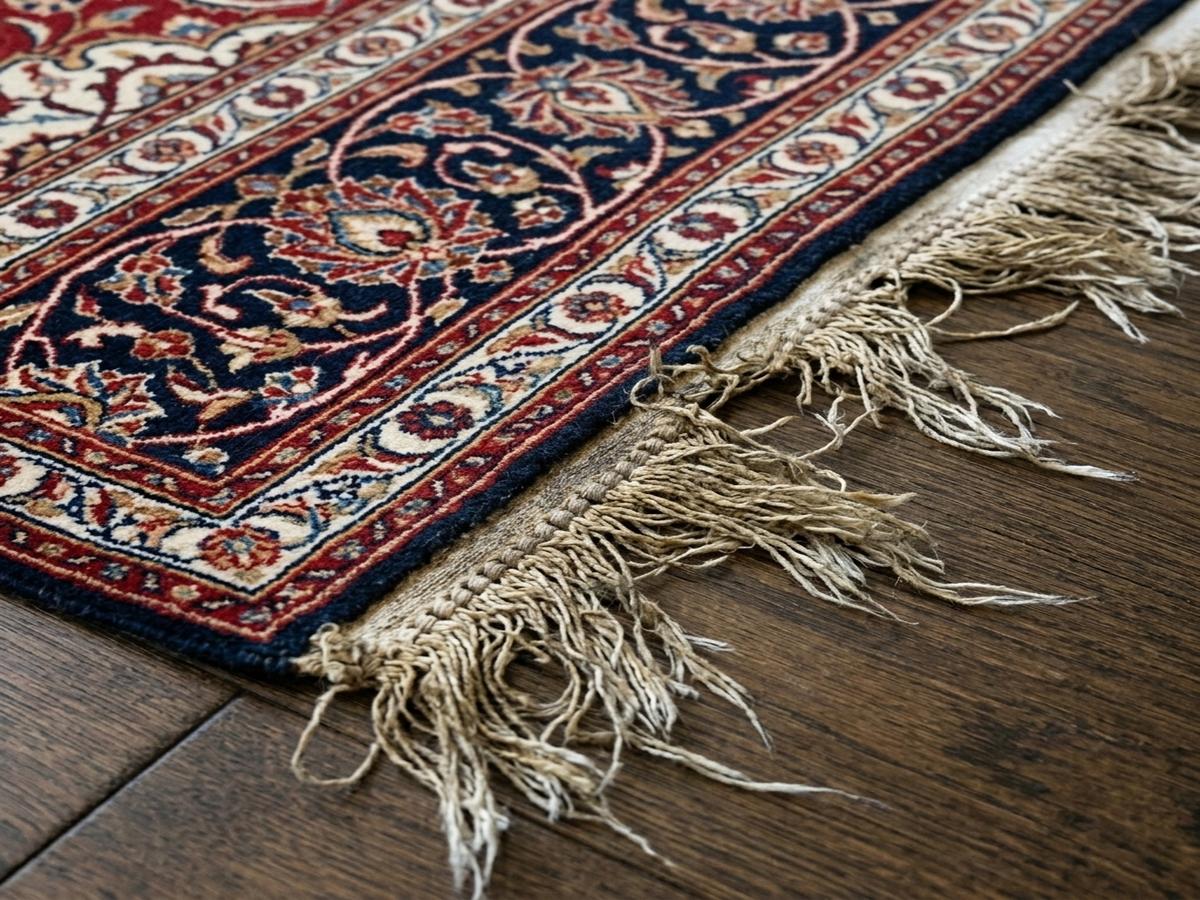
The first question is whether the rug is hand-knotted or machine-made. Turn it over. On a hand-knotted rug the pattern shows clearly on the back, and the knots are slightly uneven. The fringe is usually the ends of the warp threads running through the whole rug, not a strip sewn on afterwards.
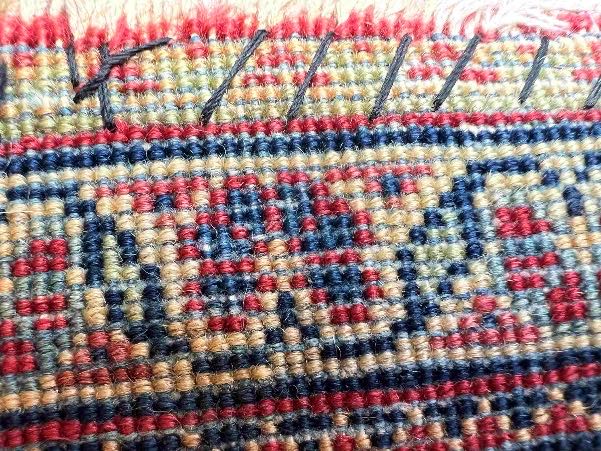
After that come origin, age, materials and condition. Our guide to Persian and Oriental rugs explains how rugs are woven, how they are classified, and what makes a rug authentic.
4. Get the right kind of appraisal
An appraisal answers a specific question, and the answer depends on the purpose. Tell the appraiser what you need it for:
- Estate settlement or dividing among heirs: the rug's fair market value, so it can be listed with the estate or shared fairly.
- Insurance: usually the cost of replacing the rug with a comparable one.
- Charitable donation: fair market value, following IRS rules (see below).
At Noor Oriental Rugs, we photograph and measure each rug and prepare a detailed document with its specifications and estimated value. The final document usually takes one to two weeks. Appointments can be made at our Cambridge showroom, and estate visits can be arranged. See rug appraisals in Cambridge for details.
5. Decide: keep, restore, sell or donate
Keep it
If the rug stays in the family, have it professionally hand-washed first. Fine handmade rugs should be washed every three to five years, depending on foot traffic. Our Oriental rug cleaning includes dusting, color testing, hand-washing, stain treatment and mothproofing, and takes two to four weeks.
Restore it
Worn fringes, moth damage, holes and worn pile can often be repaired. A good repair uses matching wool and dyes and the same knot as the original, so it blends in. We give free evaluations and estimates; see Oriental rug restoration. Our before-and-after cleaning article shows what a careful wash can reveal.
Sell it
If you plan to sell, get an independent appraisal first, so you know the rug's value before you hear an offer. Selling routes include auction houses, consignment and private sale. Room-size rugs in good condition are usually the easiest to place.
Donate it
Rugs can also go to a qualified charity, and the donation may be tax-deductible. The IRS rules for donated property are set out in Publication 561 and the instructions for Form 8283:
- If your total deduction for donated property is more than $500, you file Form 8283 with your tax return.
- If you claim more than $5,000 for one item, or for a group of similar items, you generally need a qualified appraisal, and the appraiser signs Section B of Form 8283.
Ask your tax adviser how these rules apply to you. Our articles on donating rugs for charitable purposes and donation FAQs explain how a rug donation works with us.
6. Free pickup in Greater Boston
Large rugs are heavy and awkward to move. We offer free pickup and delivery in the Greater Boston area for cleaning and restoration, and you are welcome to bring smaller rugs to our showroom at 769 Concord Ave, Cambridge.
Frequently Asked Questions
Should I clean an inherited rug before it is appraised?
No. Have it looked at first. Cleaning can change a rug's condition, and the wrong method can damage the dyes. An appraiser can tell you whether the rug is worth professional washing.
How can I tell if my inherited rug is valuable?
Value depends on whether the rug is hand-knotted, its age, origin, materials, size and condition. Machine-made rugs usually have little resale value. A written appraisal is the reliable way to know.
Do I need an appraisal to donate an inherited rug?
If you claim more than $5,000 for the rug, or for a group of similar rugs, the IRS generally requires a qualified appraisal. Smaller donations have simpler rules. Check Publication 561 and ask your tax adviser.
How long does a rug appraisal take?
At Noor Oriental Rugs, the final appraisal document usually takes one to two weeks.