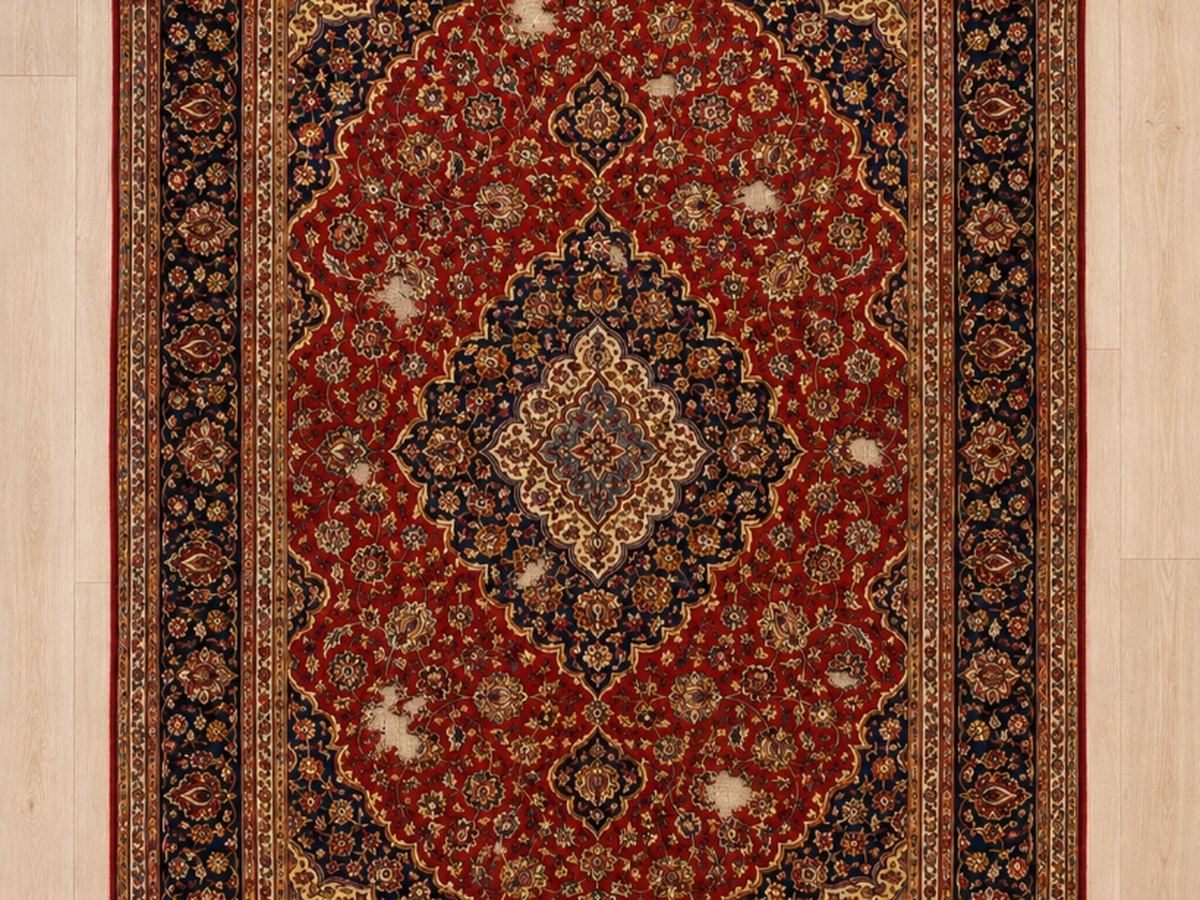
 Before Restoration
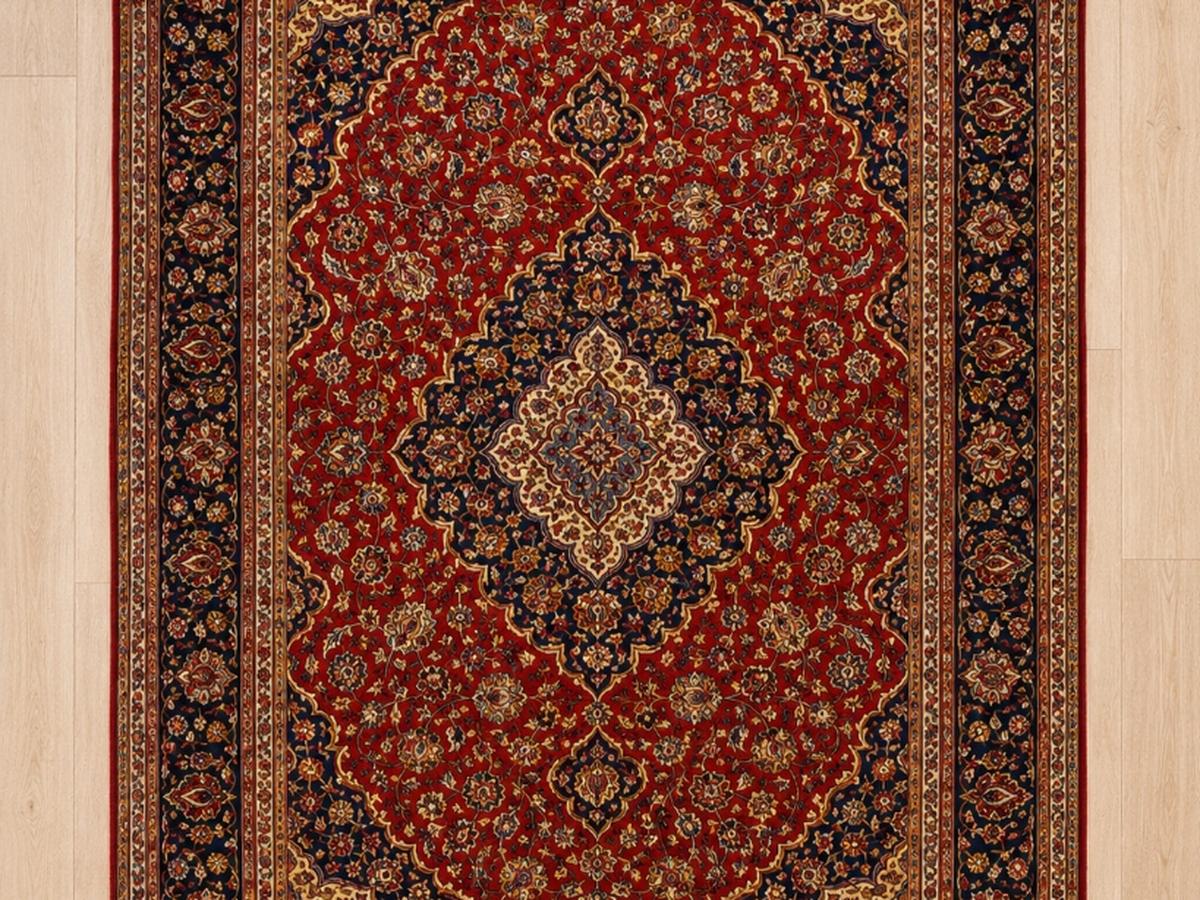 After Restoration
Antique Kashan rug — pile restoration and color revival. See more before & after results →
Oriental rug restoration for Boston and Cambridge: invisible hand-knotted pile re-weaving, fringe reconstruction, and museum-grade conservation by master weaver Mo Nooraee.
Before Restoration
After Restoration
Antique Kashan rug — pile restoration and color revival. See more before & after results →
Fine Persian and Oriental rugs are woven masterpieces designed to endure generations. However, moth damage, worn fringes, and pile wear require traditional care to preserve their value and aesthetic integrity. Led by master weaver Mo Nooraee, we source matching handspun highland wool and vegetable dyes to repair antique rugs invisibly.
At Noor Oriental Rugs, Inc., we reject short-cut machine repairs. Every thread is matched for fiber count, spin density, and color run, ensuring that the structural and historical value of your heirloom rug is preserved completely.
Our Oriental and Persian rug repair services include:
Email photos of your rug’s damaged areas to info@noororientalrugs.com or describe them in our evaluation form. Mohammad will provide a personal museum-quality assessment.
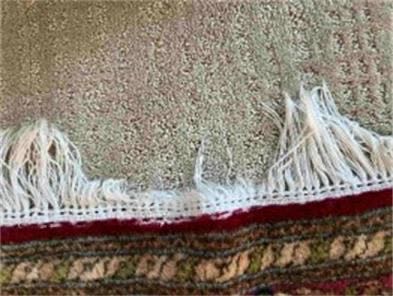
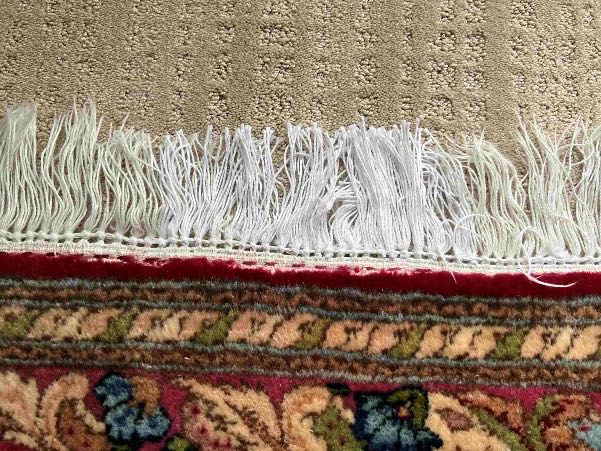
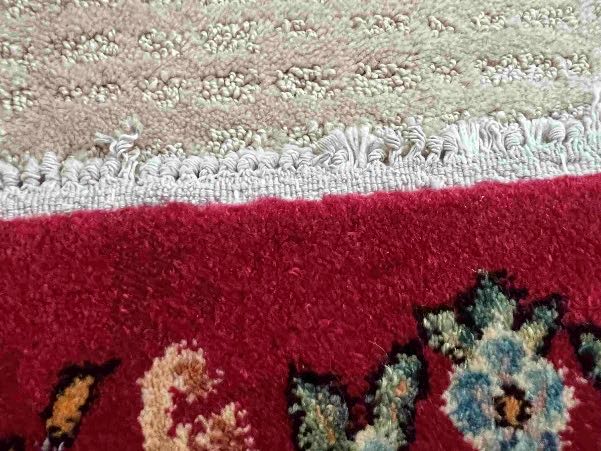
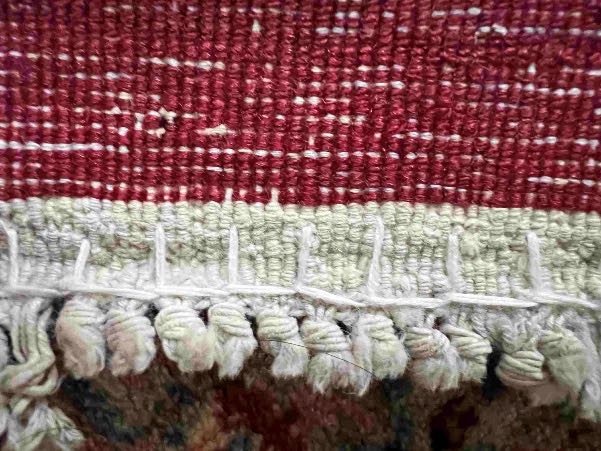
Go to Evaluation FormWhen a beloved rug suffers from frayed, damaged, or unraveling edges, as seen in “Before Sarbafi Reconstruction”, it compromises both its beauty and structural integrity. Our expert Sarbafi reconstruction service goes beyond simple repairs by meticulously rebuilding the rug’s foundational warp threads. The remarkable results of this traditional restoration technique are evident in “After Sarbafi Reconstruction”, which showcases a newly restored, uniform fringe that perfectly secures the rug’s edge while returning it to its original elegance.
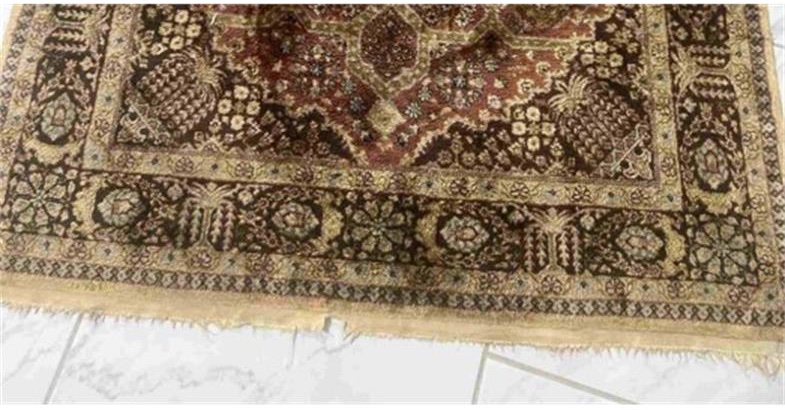
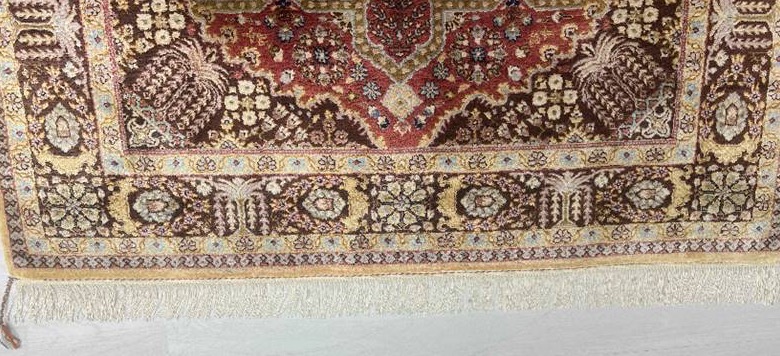
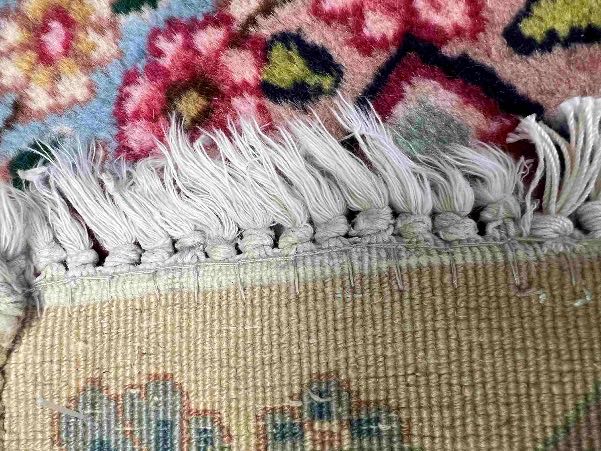
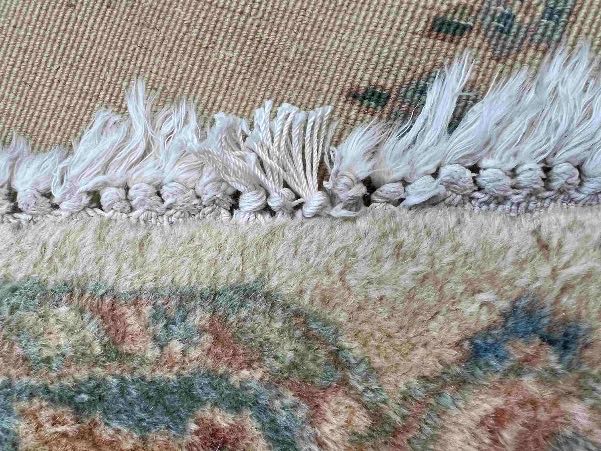
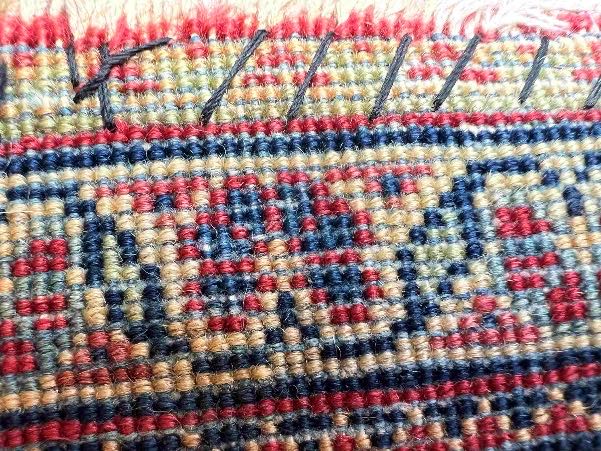
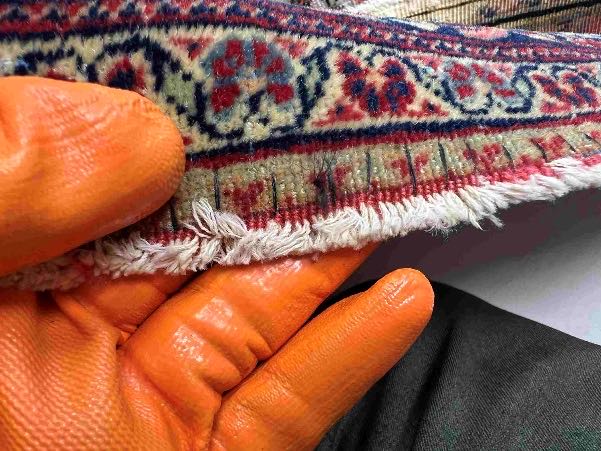
This technique is used to protect the pile of a rug by stitching over its edge to prevent the loose threads from unraveling by creating a zig-zag or overlocking stitch along the raw edge.
A repair stops damage from getting worse; a restoration rebuilds what is missing so it matches the original as closely as possible. Many rugs need a little of both. Here is what each kind of Oriental rug repair involves, and when it is worth doing.
A hole goes through the pile and the foundation. To repair it properly, the missing warp and weft threads are rebuilt first, then the pile is knotted back in by hand, knot by knot, at the same density, with the same knot and in matched wool and colors, so the new area wears at the same rate as the old. A clean tear can sometimes be closed and secured without rebuilding a large area. Holes are always worth dealing with early: edges left loose keep unravelling, and a small repair is quicker and costs less than a large one.
On a hand-knotted rug the fringe is the end of the warp threads that run through the whole rug, so it is part of the structure, not decoration. When it wears away, the last rows of knots start to come loose. Depending on how much is lost, the ends can be secured to stop the unravelling, or the warps and lost rows can be rebuilt, as in our Sarbafi reconstruction work shown above. A fringe sewn on as a separate strip is how machine-made rugs are finished; on a handmade rug, the repair works with the warp threads themselves. Read more in our guide to rug fringe repair.
The sides of a rug are wrapped with yarn to protect the outer warps. When that wrapping wears through, the sides begin to fray and the outer knots can loosen. Overcasting, shown above, rewraps the sides in matching wool. It is a modest repair that protects the whole rug, and it is worth doing as soon as fraying appears.
Moth larvae eat wool pile and, if left long enough, the foundation threads beneath it. Damage usually starts where a rug is dark and undisturbed, under furniture or in storage, and shows as bare patches, thin spots or loose tufts of wool. The rug is cleaned first, which includes mothproofing in our 7-step cleaning process, and then the damaged areas are rebuilt from the foundation up. It is important to check the whole rug, because moth damage is rarely confined to one spot. Our article on moth damage in wool rugs explains the signs, what to do the day you find it and how to keep moths away.
Strong sun can fade one part of a rug more than the rest, and water from a flood or a long spill can make dyes run. Faded areas can be brought back into balance with matching natural dyes, and colors that have run need prompt professional attention. Because natural dyes age and change slowly, matching them takes an experienced eye; it is one reason our repairs spin several shades of the same dye together. Our article on why rug colors run or fade explains the causes and what to do right away.
Most hand-knotted wool rugs can be repaired. Whether a repair is worth it depends on the rug’s value to you, its value on the market and how much work it needs, and a free evaluation answers all three. If you need the market value in writing, for insurance or an estate, see our certified rug appraisals. You can see finished repairs in our restoration gallery.
We provide Oriental and Persian rug repair and restoration for Cambridge, Boston, Brookline, Newton, Belmont, Lexington, Wellesley and across Greater Boston, with free pickup and delivery in the Greater Boston area.
Email photos of the damaged areas to info@noororientalrugs.com or describe them in our evaluation form, and Mohammad will tell you what the rug needs, what it involves and how long it will take before any work starts.
Pioneered by Mo Nooraee
Rated 4.9 out of 5 from 114 reviews on Google.
“We had a great experience having a Turkish rug cleaned and repaired, and a kilim rug completely restored after being trashed by moths. The kilim restoration is especially astonishing - one would never know the terrible shape it was in. The Turkish rug is bright and crisp again, and the work done to shore up the ends has greatly improved its appearance and durability. … Thank you for making these rugs beautiful again!”
“We are very happy with the service we received at Noor Oriental Rugs. We brought in a rug for evaluation and were immediately treated as a guest and not a client. Mr. Noor gave us the history of the rug and showed us how he would restore it and discussed the cleaning process. When we picked up the rug several weeks later, the colors were vibrant and the restoration work was indistinguishable from the side that was not in need of repair.”
Our Ten Rules call for wool and dyes that match the original rug. Read why hand-spun mountain wool matters, how natural dyes are made and matched, and how to tell an authentic handmade rug. Our guide to Persian and Oriental rugs explains how rugs are woven and classified.
A gentle hand wash is often the first step before a repair, and a certified appraisal records a rug’s value before or after restoration. See finished work in our restoration gallery, or browse our Persian rugs for sale.
The cost of rug restoration is determined by the size of the damaged area, knot density (KPSI), and the materials required, such as matching handspun wool and organic dyes. Noor provides complimentary evaluations to establish a precise estimate.
Depending on the complexity of the re-weaving and matching raw materials, restoration typically takes anywhere from 4 weeks to several months for extensive, museum-quality conservation.
Our restoration follows ten rules so the repair blends in: wool from the same region, hand-spun and organically dyed, several shades spun together for a patina of age, the same knot as the original weave (Turkish or Persian), and the same yarn thickness.
Yes. Antique hand-knotted rugs represent valuable artistic and historical legacies. Restoring them preserves their structural integrity, aesthetic value, and resale worth.
Yes. We offer free pickup and delivery in the Greater Boston area.
Yes. The missing foundation threads are rebuilt and the pile is knotted back in by hand at the same density, with the same knot and matched wool and colors, so the repair blends in.
Yes. The rug is cleaned first, including mothproofing, and then the damaged areas are rebuilt from the foundation up. We check the whole rug, because moth damage is rarely confined to one spot.
Yes. Depending on how much is lost, the ends can be secured to stop unravelling, or the warps and lost rows can be rebuilt. On a hand-knotted rug the fringe is part of the structure, so the repair works with the warp threads.