Moth damage is one of the most common problems we see in wool rugs, and one of the most avoidable. Clothes moths do not eat dirt; their larvae eat the wool itself. Left alone, they work quietly in the dark parts of a rug, and by the time the damage is easy to see, it is often larger than it looks. The good news is that moth damage can be stopped, and in a hand-knotted rug it can be repaired so the rug is whole again.
This guide explains how to recognize moth damage, what to do as soon as you find it, how a proper repair works, and how to keep moths from coming back.
Why moths go for wool rugs
The damage is done by the larvae of clothes moths, not the adult moths you may see fluttering near a window. The larvae feed on keratin, the protein in wool, silk, fur and feathers. A fine wool rug is an ideal home for them, and a rug that is dirty, dark and undisturbed is the most inviting of all: food stains, hair and skin cells add to their diet, and nothing disturbs them while they feed.
That is why moth damage usually starts in the same places:
- Under furniture, where a sofa, bed or chest shades the rug and no one vacuums.
- Along the edges and the back of the rug, especially against a wall.
- In rugs that are rolled up and stored, in a closet, attic, basement or storage unit.
- In a room that is rarely used, such as a guest room or formal dining room.
Signs of moth damage
Check the places above first, and look at both the front and the back of the rug.
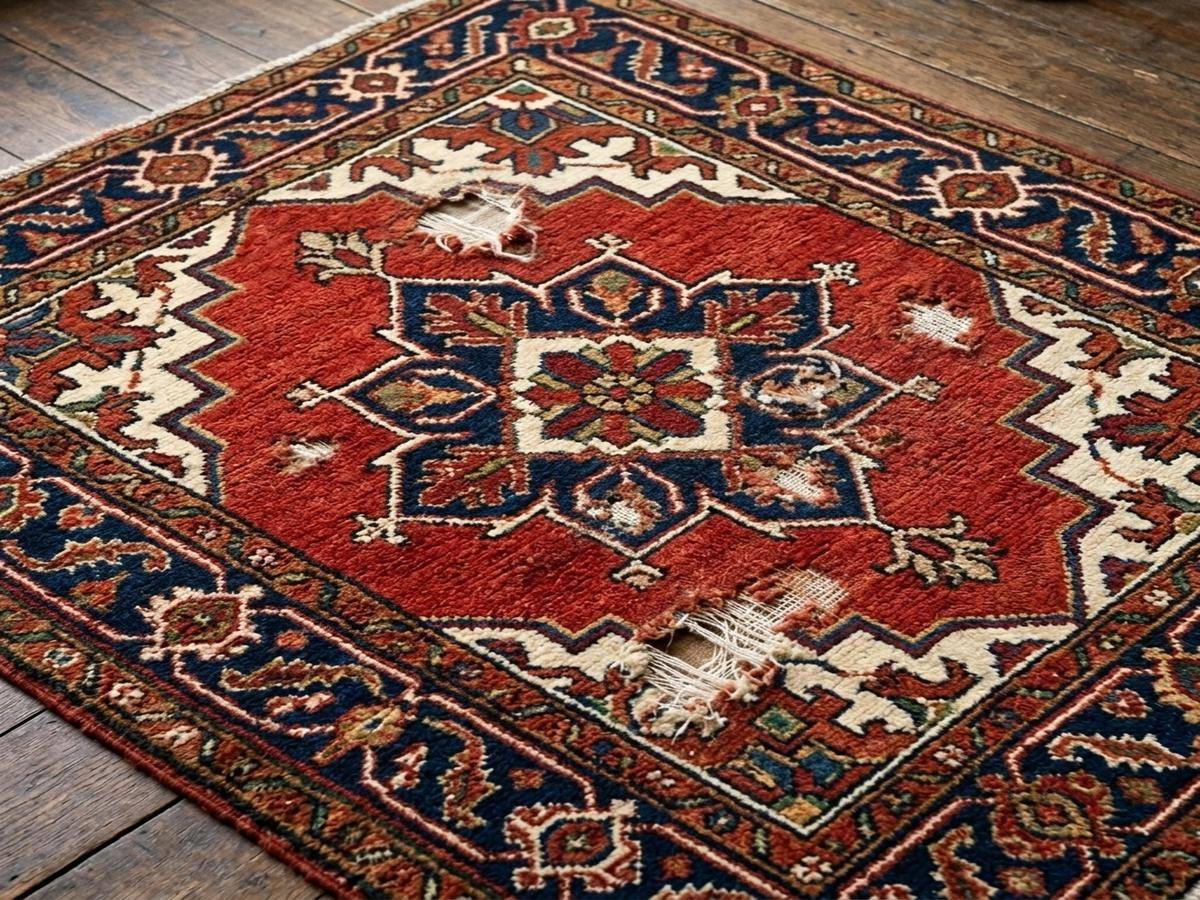
- Bare patches or thin spots in the pile, where the wool has been eaten down to the knots or the foundation.
- Loose tufts of wool that come away when you brush the pile with your hand.
- Small, silky tubes or cases, often the same color as the wool, stuck to the pile or the back of the rug. These are the larvae's casings.
- Fine, sandy debris under the rug when you lift it.
- Small white or cream larvae, or small pale moths that fly away from the rug when it is moved.
- A pattern of damage that follows one color. Moths sometimes favor certain wools, so the damage can follow the outline of one color in the design.
What to do the day you find moth damage
- Do not put the rug back in storage. Moths thrive where they are undisturbed.
- Take the rug outside, if you can, and vacuum both sides thoroughly, then vacuum the floor where it lay and the furniture around it. Empty the vacuum outdoors.
- Check every other wool rug, wool blanket and wool garment nearby. Moth damage is rarely confined to one spot, or to one rug.
- Do not try to wash the rug at home. Soaking a wool rug at home risks running dyes and a damp foundation, and it does not reliably remove eggs and larvae from deep in the pile.
- Have it professionally cleaned and mothproofed, then have the damaged areas assessed for repair.
Acting quickly matters. Larvae that are left in place keep feeding, and once they reach the foundation threads, the repair becomes larger.
How moth damage is repaired
A proper repair starts with a wash. At Noor, the rug first goes through our 7-step cleaning process, which includes mothproofing of the wool and silk fibers. That removes the larvae, eggs and the soil they feed on, and shows the true extent of the damage.
Then the damaged areas are rebuilt from the foundation up:
- Where only the pile has been eaten, the knots are tied back in by hand, using the same knot as the original weave and wool spun and dyed to match.
- Where the moths have reached the foundation, the missing warp and weft threads are rebuilt first, and then the pile is knotted back in, knot by knot, at the same density as the rug around it.
Our restoration follows Mo Nooraee's Ten Rules of Authentic and Seamless Restoration: wool from the same region where the rug was woven, hand-spun and organically dyed, with several shades spun together so the repair carries the same patina of age as the rest of the rug. A repair made with the wrong wool would sit at a different height, wear at a different rate and show itself within a few years. You can read more about why the wool matters in our article on mountain wool.
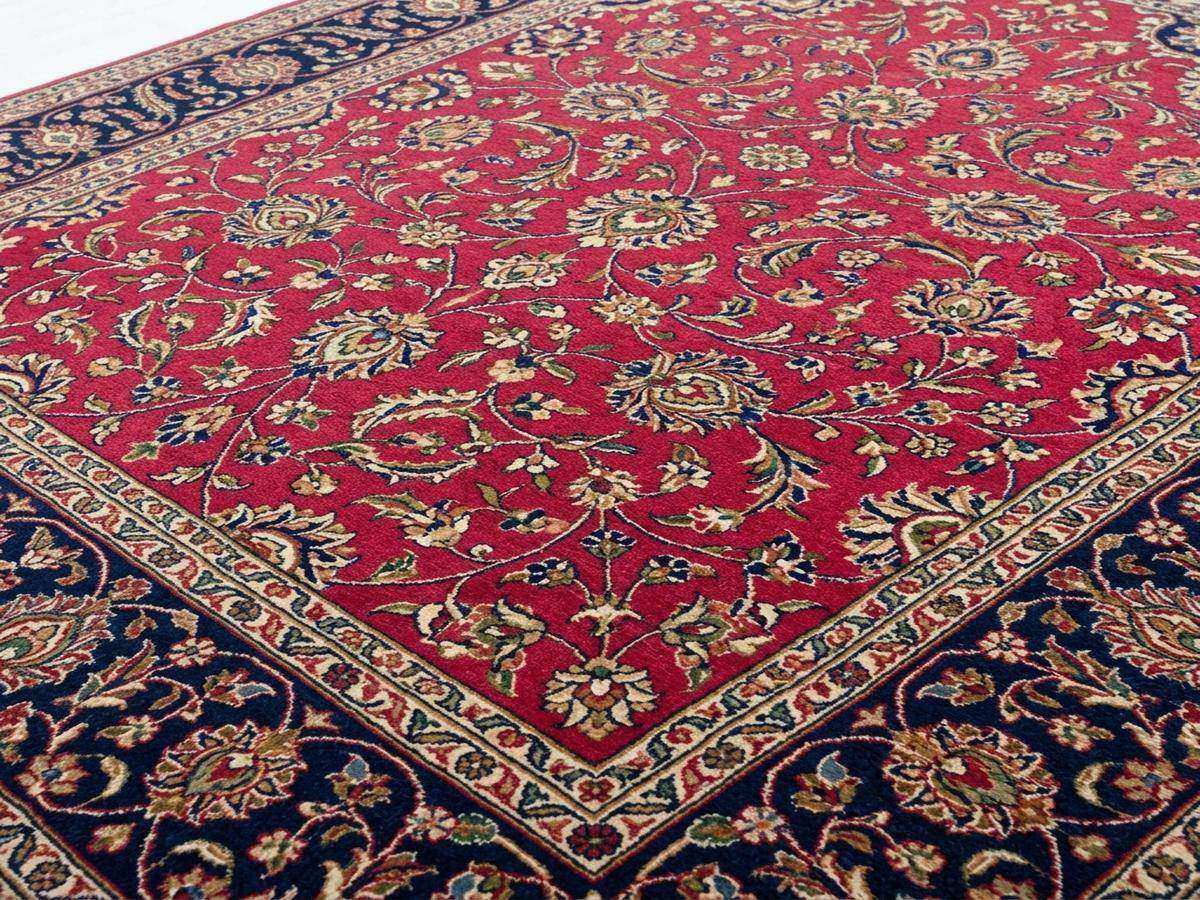
See more finished repairs in our restoration gallery.
Is it worth repairing moth damage?
Most hand-knotted wool rugs can be repaired, and moth damage is worth dealing with early, because it only grows. Whether a repair is worth doing depends on the rug's value to you, its value on the market and how much work it needs. A free evaluation answers all three: email photos of the damaged areas to info@noororientalrugs.com or describe them in our evaluation form, and Mo will tell you what the rug needs before any work starts. If you need the rug's value in writing, for insurance or an estate, see our certified rug appraisals.
How to keep moths away
- Vacuum regularly, including under furniture and along the edges, and the back of the rug once or twice a year.
- Turn and move rugs from time to time. Light and movement disturb moths.
- Keep rugs clean. Professional washing every 3 to 5 years removes the soil that attracts moths; see how often to clean a Persian rug.
- Store rugs clean, dry and rolled, not folded, wrapped in breathable material rather than sealed plastic, and check them every few months.
- Check rugs in rarely used rooms at least twice a year.
Frequently Asked Questions
How do I know if my rug has moth damage?
Look for bare or thin patches in the pile, loose tufts of wool, small silky casings, or sandy debris under the rug. Check under furniture, along the edges and on the back first, because moths prefer dark, undisturbed places.
Can moth damage in a Persian rug be repaired?
Yes. The rug is cleaned first, including mothproofing, and then the damaged areas are rebuilt from the foundation up, using matching hand-spun wool, natural dyes and the same knot as the original weave.
Will the repair be visible?
Our restoration follows ten rules so the repair blends in: wool from the same region, hand-spun and organically dyed, several shades spun together for a patina of age, the same knot and the same yarn thickness as the original rug.
Does professional cleaning kill moths?
Our 7-step cleaning removes the larvae, eggs and the soil they feed on, and includes a mothproofing treatment for the wool and silk fibers. Regular vacuuming and washing every 3 to 5 years help keep moths away.
Should I throw away a rug with moth damage?
Usually not. Most hand-knotted wool rugs can be repaired. Send us photos for a free evaluation before you decide.