The fringe is usually the first part of a rug to show wear, and the easiest to dismiss as cosmetic. On a hand-knotted rug, it is anything but. The fringe is the end of the warp threads that run the whole length of the rug and hold every knot in place. When the fringe wears away, the rows of knots at the ends start to come loose, and the rug begins to unravel from the ends inward.
This guide explains why the fringe matters, how to tell when it needs attention, and how it is repaired properly.
Why the fringe matters on a handmade rug
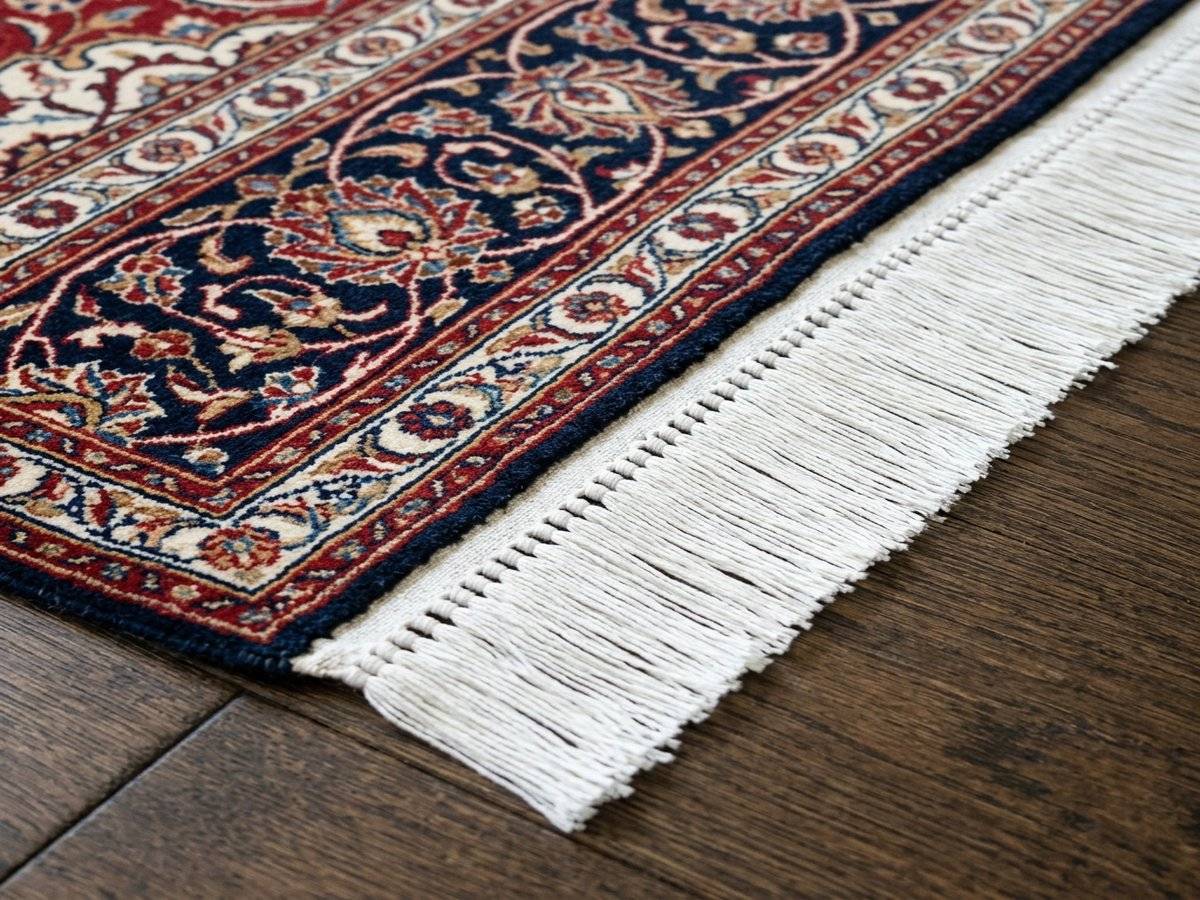
A hand-knotted rug is built on a foundation of warp threads, stretched on the loom from one end to the other. The weaver ties each knot of pile around a pair of warps, row by row, and passes weft threads across between the rows to lock them in. When the rug is finished and cut from the loom, the ends of the warps are left as the fringe, usually secured with a band of flat weave or a row of knots.
So the fringe is part of the rug's structure. That is also one of the simplest ways to tell an authentic handmade rug: on a machine-made rug, the fringe is often a separate strip sewn or glued onto the ends. On a hand-knotted rug, it grows out of the rug itself. That difference also decides how a fringe is repaired: on a handmade rug, the repair works with the warp threads themselves.
What damages a fringe
- Vacuum cleaners. The single most common cause. A vacuum's brush catches the fringe, pulls it in and tears it. Our restoration gallery shows a Kerman rug whose fringe was damaged this way.
- Foot traffic and furniture. The ends of a rug take wear from doors, chairs and feet, especially on runners.
- Washing at home or in a machine, which can tangle, shrink and weaken the cotton.
- Moths, when the fringe or the end rows are wool.
- Age. On an old rug, cotton warps simply wear thin over decades.
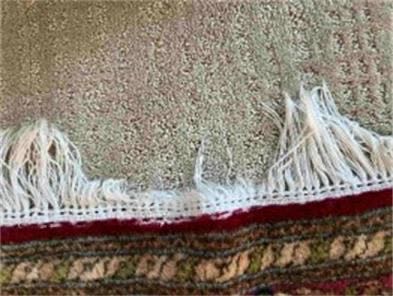
Signs your fringe needs attention
- Fringe strands are missing or broken, leaving gaps along the end.
- The band of flat weave or knots at the end is worn through, so nothing is holding the last row of pile.
- Knots at the end are loose, or tufts of pile come away when you run your hand along the edge.
- The end of the rug is no longer straight, or has started to curl.
If the pile itself has begun to come loose, the rug is losing knots. That is the time to act, because every row lost makes the repair larger.
How a fringe is repaired
The right repair depends on how much has been lost.
Securing the ends. If the fringe is worn but the knots are still intact, the ends can be secured to stop the unravelling: the last rows are stitched and locked so no more knots come loose. It is a modest repair that protects the rug, and it is worth doing as soon as the damage appears.
Rebuilding the warps and lost rows. If the fringe and some rows of knots are already gone, the warps are rebuilt and the lost rows are knotted back in. This is our Sarbafi reconstruction work: the foundation warp threads are rebuilt so the rug ends in a new, uniform fringe that secures the edge. It returns the rug to its original length and shape, rather than simply stopping the damage.
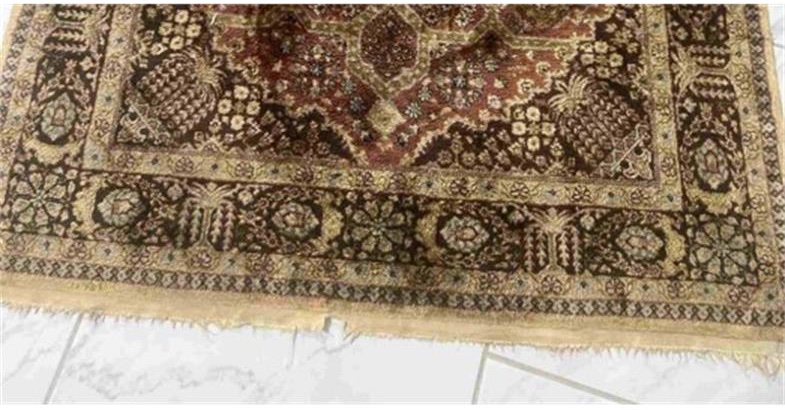
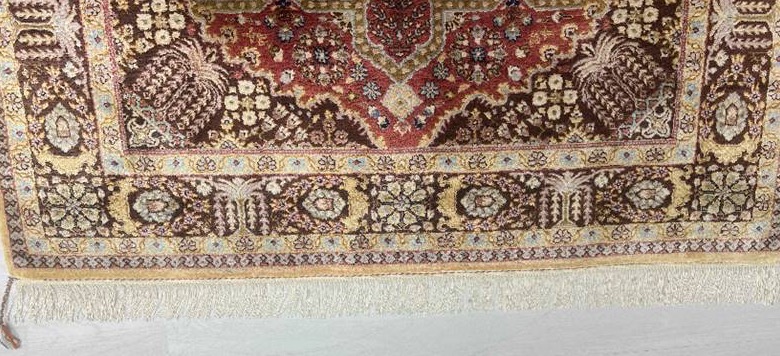
What about a sewn-on fringe? A fringe sewn on as a separate strip is how machine-made rugs are finished. On a handmade rug, it hides the problem rather than fixing it: the knots behind it can keep coming loose. A proper repair works with the rug's own warp threads.
The sides of a rug need the same kind of attention. When the yarn wrapped around the sides wears through, they begin to fray. Overcasting rewraps the sides in matching wool to protect the outer warps. You can see both kinds of work in our Oriental rug restoration and repair page and in our restoration gallery.
Caring for the fringe
- Keep the vacuum away from the fringe. Vacuum the pile up to the fringe, not over it. To tidy a fringe, comb it gently by hand or with a wide-toothed comb.
- Wash it with the rug. A dirty, gray fringe is usually cleaned in a professional hand wash along with the rest of the rug; see how often to clean a Persian rug. Never bleach a fringe, which weakens the cotton.
- Turn the rug end to end once or twice a year so both ends share the wear.
- Use a rug pad to keep the rug from shifting and the ends from catching.
Frequently Asked Questions
Is the fringe on a Persian rug important?
Yes. On a hand-knotted rug, the fringe is the end of the warp threads that run through the whole rug and hold the knots, so it is part of the structure, not decoration. When it wears away, the knots at the ends start to come loose.
Can a worn rug fringe be repaired?
Yes. Depending on how much is lost, the ends can be secured to stop the unravelling, or the warps and lost rows can be rebuilt. On a hand-knotted rug the repair works with the rug's own warp threads.
Can you just sew a new fringe on?
A sewn-on fringe is how machine-made rugs are finished. On a handmade rug, it hides the damage without stopping it. A proper repair secures or rebuilds the rug's own warps.
How do I clean the fringe on my rug?
Keep the vacuum off it, comb it gently by hand, and have it cleaned with the rug in a professional hand wash. Never bleach a fringe, which weakens the cotton.
How much does fringe repair cost?
It depends on the width of the rug and how much has been lost. Email photos of the ends to info@noororientalrugs.com for a free evaluation.