Buying a handmade rug is a big decision, and the market is full of rugs sold as "Persian" or "handmade" that are neither. The good news is that you do not need to be an expert to spot the difference. A genuine hand-knotted rug leaves evidence of how it was made, and you can see most of it with your own eyes. Here are the checks we use at Noor Oriental Rugs, in the order we use them.
1. Turn the rug over — the back tells the truth
The back of a rug is the first place to look, and it is the hardest place to fake. On a hand-knotted rug, you can see the individual knots, row by row, and the pattern on the back is a clear mirror of the pattern on the front. Run your hand across it: you will feel slight bumps from the knots, and the knotting will show small irregularities, because a person tied each knot by hand.
A machine-made rug looks very different from behind. The back is smooth and even, the rows are perfectly uniform, and it often has a stiff, coated backing. A hand-tufted rug is covered by a canvas or cloth backing glued in place, so you cannot see a pattern at all. If the back is hidden, covered or coated, ask why.
2. Check the fringe
On a genuine hand-knotted rug, the fringe is not decoration added at the end. It is the ends of the warp threads — the foundation threads the rug was knotted around — left long when the rug came off the loom. Look closely where the fringe meets the body of the rug: the threads should flow out of the weave itself, and the fringe will usually vary a little in length and thickness. Because it is part of the structure, a worn fringe is repaired by working with those warp threads; see rug fringe repair.
On a machine-made or hand-tufted rug, the fringe is a separate strip sewn or glued on after the body was finished. If you can see stitching or glue where the fringe joins the rug, or the fringe looks perfectly even and separate from the weave, the rug was not hand-knotted.
3. Feel the materials
An authentic handmade rug is made from natural fibers only: wool, cotton or silk. The pile is usually wool, the foundation is usually cotton, and fine rugs may use silk. The dyes are natural too — vegetable dyes — and natural dyeing leaves a telltale sign called abrash: gentle variations of color within the same hue, where one batch of dye differs slightly from the next. Machine-made rugs cannot copy abrash; their color is flat and perfectly even.
If the rug feels rough, plasticky or slippery, be suspicious. Synthetic fibers such as polypropylene, nylon, polyester, acrylic or viscose are the materials of machine-made rugs, not handmade ones. A real wool rug feels soft and springy under your hand, and it breathes — which is part of why handmade rugs last for decades while synthetic ones wear out.
4. Persian means made in Iran
This is the point most people miss. "Persian" describes where a rug was woven, not how it looks. A true Persian rug was woven by hand in Iran, historically Persia. A rug woven in a Persian design in India, Pakistan, China or Turkey is a real handmade rug, and it may be a very good one — but it is Persian-style, not Persian, and it should not be sold or priced as Persian.
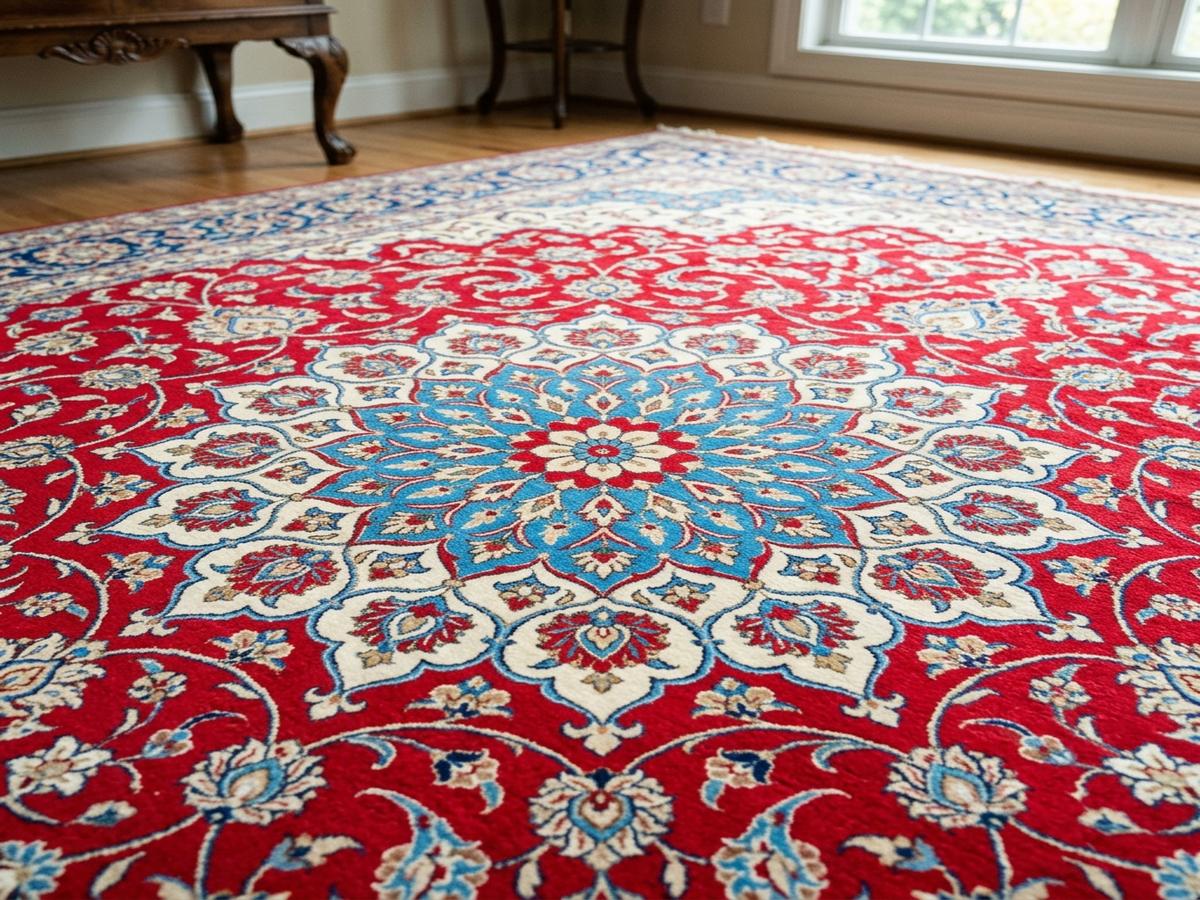
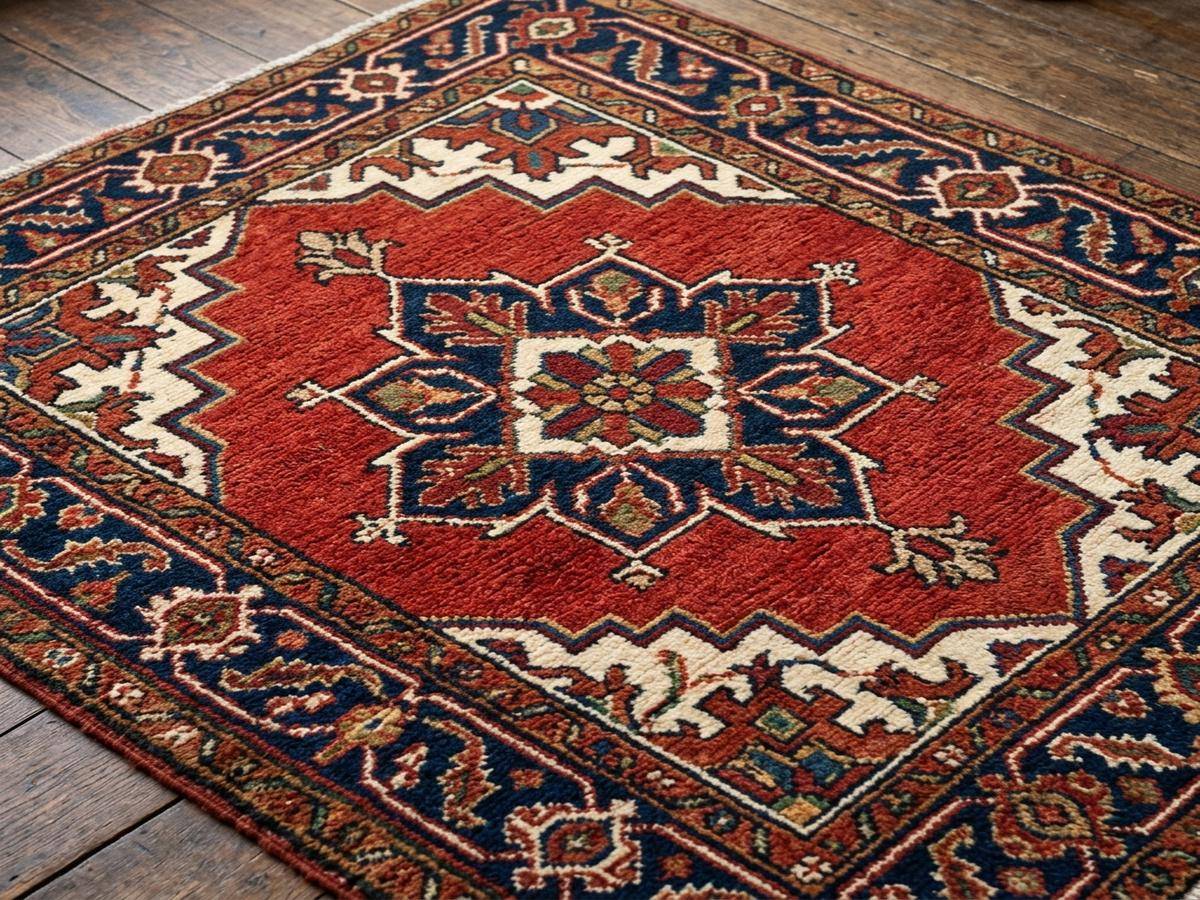
The design itself often tells you the origin: Tabriz, Heriz, Kashan, Nain and Isfahan are all Persian weaving centers, each with its own patterns and colors, and all are types we carry at Noor. If a seller calls a rug Persian, ask them to put the origin in writing, and check the label for the materials and the country of origin.
5. Know the three ways a rug is made
Most rugs passed off as Persian are made one of two other ways, and the three methods are easy to tell apart once you know what to look for.
- Hand-knotted: knots tied by hand, one at a time, around the warp threads. Pattern clear on the back, fringe is the warp ends, edges wrapped by hand. Small variations across the rug. This is how every genuine Persian pile rug is made, and it takes months of skilled work.
- Hand-tufted: yarn punched through a canvas backing with a tufting gun, then glued in place. Canvas backing hides the pattern, fringe sewn on. Faster to make, and the glue breaks down over time.
- Machine-made: woven on a power loom. Perfectly uniform, smooth coated back, fringe sewn or glued on, pattern identical from end to end.
A higher knot count generally means a finer, more detailed rug — but a low knot count does not mean a rug is fake. Village rugs are knotted more loosely than fine city rugs on purpose, and they are still fully authentic.
6. Ask the seller the right questions
Before you buy, ask three things, and expect clear answers. What is it made of, and where was it woven? Is the origin stated in writing? And what comes with the rug? Every rug at Noor Oriental Rugs comes with a certificate of authenticity, and Mo Nooraee provides certified appraisals to document a rug's authenticity and value — for insurance, for an estate, or simply for your own records.
See it for yourself
The surest check is to handle the rug in person, and that is what our showroom is for. Bring a rug you already own, or come and compare ours side by side: turn them over, feel the fringe, look at the knots. We are at 769 Concord Ave in Cambridge, open Tuesday, Wednesday, Friday and Saturday, 8:00 AM to 3:00 PM, and a free rug evaluation is always available if you would like an expert eye on a rug before you buy or before you decide to clean or restore it.