A fine handmade Persian or Oriental rug should be professionally hand washed every 3 to 5 years. Where your rug falls in that range depends on how much it is walked on: a rug in a busy hallway or family room needs washing sooner than one in a quiet bedroom. Between washes, regular vacuuming and a few simple habits keep it in good condition.
This guide explains why the timing matters, how to judge it for each room in your home, and the signs that a rug is ready for a wash now.
Why a Persian rug needs regular washing
Most of the dirt in a rug is not on the surface, where you can see it. Fine grit works its way down through the pile and settles at the base of the knots, where a vacuum cannot reach. Every time someone walks across the rug, that grit grinds against the wool fibers like sandpaper. Over the years it cuts the fibers, dulls the colors and wears the rug thin from the inside.
A professional hand wash removes that grit before it can do lasting damage. It also does things a vacuum never can: it lifts the dull film that builds up on the wool, treats stains, and restores the natural softness and luster of good wool. That is why washing on a regular schedule is one of the best ways to protect a rug's value, as well as its looks.
How often to clean a Persian rug, room by room
The 3 to 5 year range is a guide, not a rule. The more feet that cross a rug, the more grit it collects and the sooner it should be washed.
- Entrance halls, hallways and runners: at the shorter end of the range. These rugs take the most traffic and the most grit from outdoor shoes, especially through a New England winter of salt, sand and slush.
- Family rooms and living rooms: toward the shorter end in a busy household, and especially in homes with pets or young children.
- Dining rooms: a rug under a dining table can usually wait longer, but wash it sooner after spills. Chairs moving in and out also wear the pile in a band around the table.
- Bedrooms and quiet rooms: toward the longer end of the range. Bare feet and light traffic mean much less grit.
- Antique, silk and decorative rugs that are rarely walked on: they still collect dust and are attractive to moths, so check them at least once a year and wash them when they show the signs below.
If you cannot remember when a rug was last washed, it is probably due.
Signs your rug is due for a wash
You do not need to wait for the calendar. These signs mean a rug needs washing now:
- The colors look dull or gray. Turn back a corner and compare the front with the back. If the back is noticeably brighter, the front is carrying a layer of soil.
- The pile feels gritty. Fold back a corner and tap firmly on the back of the rug. If dust falls out onto the floor, grit has settled deep in the pile.
- It smells musty or holds on to cooking, smoke or pet odors.
- There are stains or spills that have not come out with blotting.
- You see small bare patches, loose tufts of wool or tiny moth casings, especially under furniture or at the edges. These need attention quickly; see our guide to repairing moth damage.
What a professional hand wash includes
A handmade rug should never be cleaned like wall-to-wall carpet. Natural dyes can run in hot water, and harsh detergents strip the lanolin that keeps good wool soft and resilient. At Noor, every rug goes through our 7-step green cleaning process:
- Thorough dusting to remove the deeply embedded dirt and grit.
- Color testing and gentle hand washing with a biodegradable shampoo, then a thorough rinse and air-drying.
- Careful stain treatment by hand, with a stain inhibitor to help protect the fibers.
- Deodorizing and disinfecting with non-toxic solutions.
- Cotton foundation treatment to help protect against fungal growth and dry rot.
- Mothproofing of the wool and silk fibers.
- Fiber conditioning to restore the wool's natural luster and softness.
The whole process takes somewhere between 2 and 4 weeks, depending on the rug's size, materials and stains. Rugs are air-dried rather than rushed, because drying a rug too fast or too hot can harm the wool and the dyes. We offer free pickup and delivery in the Greater Boston area.
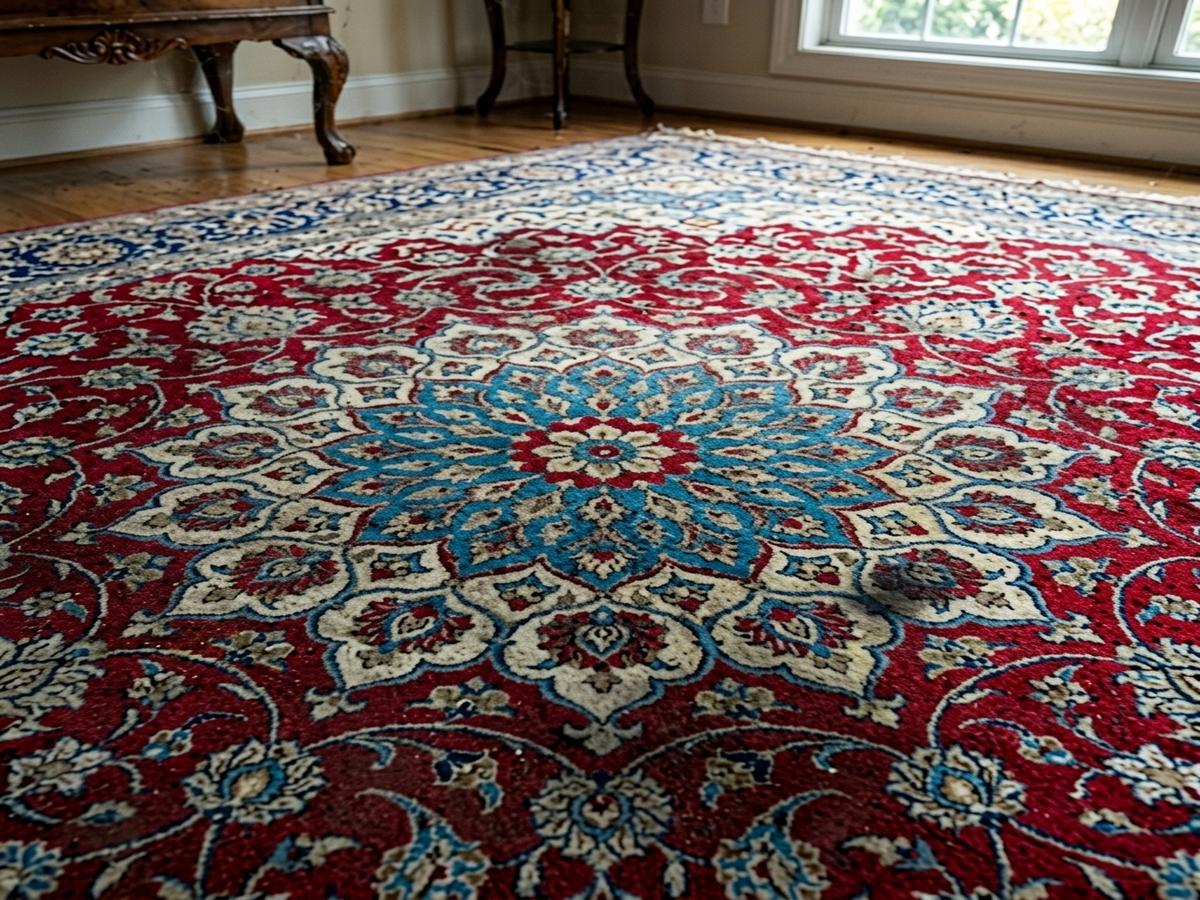
You can see what a wash can do in our Persian rug cleaning before and after article.
Caring for your rug between washes
A few habits make a real difference to how long a rug lasts and how often it needs washing:
- Vacuum regularly, without the beater bar or rotating brush on the pile. Vacuum in the direction of the pile, and keep the vacuum away from the fringe, which it can catch and tear.
- Turn the rug end to end once or twice a year, so sunlight and foot traffic are spread evenly.
- Use a rug pad on hard floors. It stops the rug from slipping and reduces wear from below.
- Keep it out of strong, direct sun for long periods, which can fade natural dyes unevenly.
- Blot spills at once with a clean white towel and cool water. Do not rub, and do not use carpet shampoo, bleach or household spot removers.
- Take off outdoor shoes where you can, especially in winter.
Why not clean a Persian rug at home?
It is tempting to rent a steam cleaner or use a carpet shampoo, but we advise against it. Steam, hot water and household carpet cleaners can make natural dyes run and strip the wool of its natural lanolin. A rug that is soaked at home is also hard to dry properly: a rug that stays damp can develop mildew and weaken its cotton foundation. Home cleaning can turn a rug that only needed a wash into one that needs a repair.
When cleaning reveals damage
Washing sometimes uncovers problems that dirt was hiding: a weak spot in the foundation, moth damage under a piece of furniture, or a fringe that has started to unravel. When that happens, we tell you before going further. Small repairs are quicker and less expensive than large ones, and our Oriental rug restoration and repair work uses matching wool, dyes and knots so the repair blends in. If you would like to know what an older rug is worth, a certified rug appraisal can be arranged at the same time.
Frequently Asked Questions
How often should a Persian rug be professionally cleaned?
Fine handmade Persian and Oriental rugs should be professionally hand washed every 3 to 5 years, depending on foot traffic. Rugs in hallways, family rooms and homes with pets or children belong at the shorter end of that range.
How often should I vacuum a Persian rug?
Vacuum regularly, more often in a busy room than in a quiet one, without the beater bar or rotating brush on the pile. Keep the vacuum away from the fringe.
Can I steam clean my Persian rug?
We advise against it. Steam, hot water and household carpet cleaners can make natural dyes run and strip the wool of its natural lanolin. Leave washing to a hand-washing specialist.
How long does professional rug cleaning take?
Our 7-step cleaning process takes somewhere between 2 and 4 weeks, depending on the rug's size, material type and stains. Pickup and delivery are free in the Greater Boston area.
What if my rug has not been cleaned in many years?
It can almost always still be washed. Tell us its size and anything you know about it, and we will send you a free estimate. If washing reveals damage, we will tell you before doing any repair.