Pets and handmade rugs can live together happily, but accidents happen. When a dog or cat has an accident on a Persian or Oriental rug, what you do in the first few minutes matters more than anything that comes after. Quick, gentle first aid gives the rug its best chance. The wrong product, or simply waiting, can leave a permanent stain, a lasting odor and, over time, real damage to the rug's foundation.
This guide covers what to do right away, what never to use, and how a rug with pet stains is properly cleaned.
Why pet urine is hard on a handmade rug
Urine does not stay on the surface. It soaks straight through the wool pile into the cotton foundation, the warp and weft threads that hold the knots, and often into the rug pad and the floor beneath. As it dries, it leaves salts and residue behind. Those cause three problems:
- Stains and color change. Urine can change the color of the wool and, on some rugs, make the dyes bleed into the colors around them.
- Odor that comes back. Residue deep in the foundation holds the smell, and humidity or a damp day can bring it back long after the spot looks dry.
- Weakened fibers. Repeated accidents in the same spot, left untreated, can weaken the foundation threads, making the rug stiff or brittle in that area.
The longer urine stays in a rug, the harder it is to remove the stain and the odor. That is why speed matters.
First aid: what to do in the first few minutes
- Blot, do not rub. Press a thick, clean white towel onto the spot and stand on it to draw out as much liquid as possible. Repeat with dry towels until no more moisture comes up. Rubbing pushes urine deeper and can distort the pile.
- Work from the outside in, so the stain does not spread.
- Use only cool, clean water if you need to dampen the area, and blot again.
- Lift the rug off a wooden floor, prop up the wet area and let both the rug and the floor dry with good air flow. A rug that stays wet underneath can develop mildew and weaken its foundation, and urine can stain the wood.
- Call us. Tell us what happened, when, and the size of the rug.
What not to use
These products are made for synthetic carpet, not for wool and natural dyes. They can set the stain, make the dyes run or damage the fibers:
- Hot water or steam, which can set the stain and make natural dyes bleed.
- Bleach, ammonia and vinegar mixtures, which can strip and discolor the wool. Ammonia also smells like urine to a pet, which can encourage repeat accidents in the same spot.
- Carpet shampoos and household spot removers, which leave residue in the pile and can make dyes run.
- Scented sprays, which only cover the odor while the residue stays in the foundation.
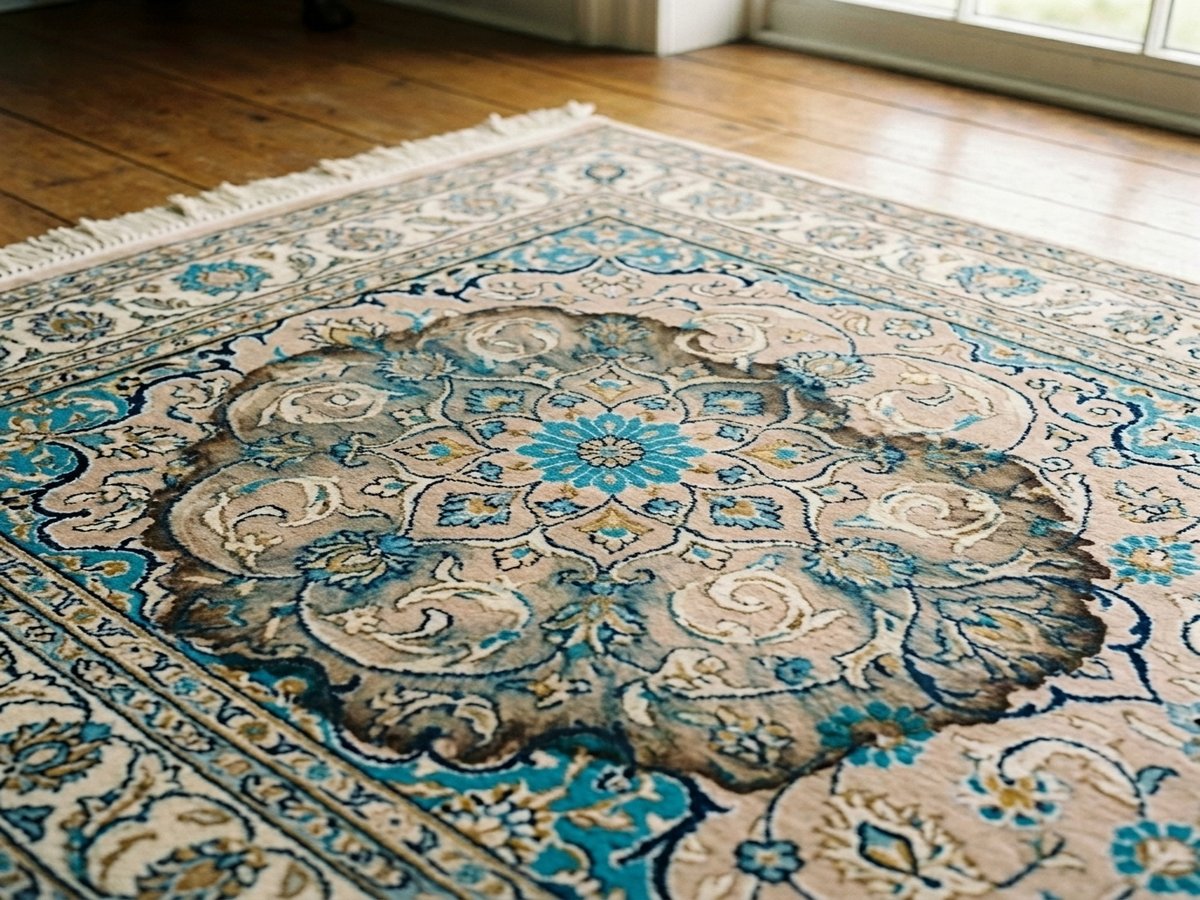
How a rug with pet stains is professionally cleaned
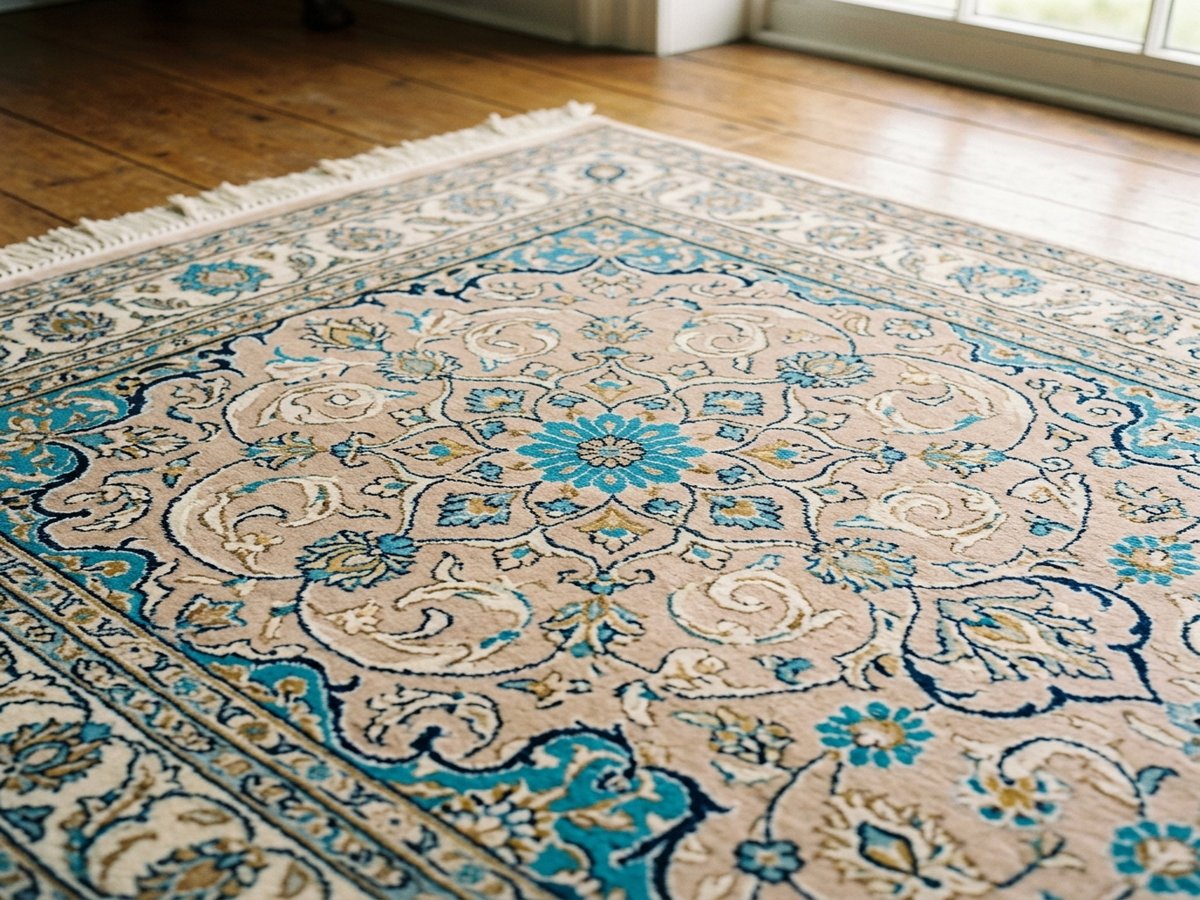
A surface treatment cannot reach urine that has soaked into the foundation. The rug needs a full wash. At Noor, every rug goes through our 7-step green cleaning process, which includes careful stain treatment by hand and deodorizing and disinfecting with non-toxic solutions. The colors are tested before washing, the rug is hand washed with a gentle, biodegradable shampoo, rinsed thoroughly and air-dried.
How completely a pet stain comes out depends on what it is, how long it has been there, and the rug's dyes. A fresh accident that was blotted quickly usually responds well. An old stain that has changed the color of the wool may lighten but not disappear. We will tell you what to expect before we start, so please let us know about any pet accidents when you request your estimate.
If urine has weakened the foundation, or the dyes have run badly, the rug may also need restoration and repair after it is washed. Our restoration gallery includes a rug with dye bleeding from water damage, before and after.
Living with pets and fine rugs
- Choose the right rug for the room. A sturdy village or tribal wool rug with a busy pattern is more forgiving than a fine, pale silk rug.
- Keep to a regular cleaning schedule. Homes with pets belong at the shorter end of the 3 to 5 year range; see how often to clean a Persian rug.
- Vacuum often to lift pet hair before it works into the pile.
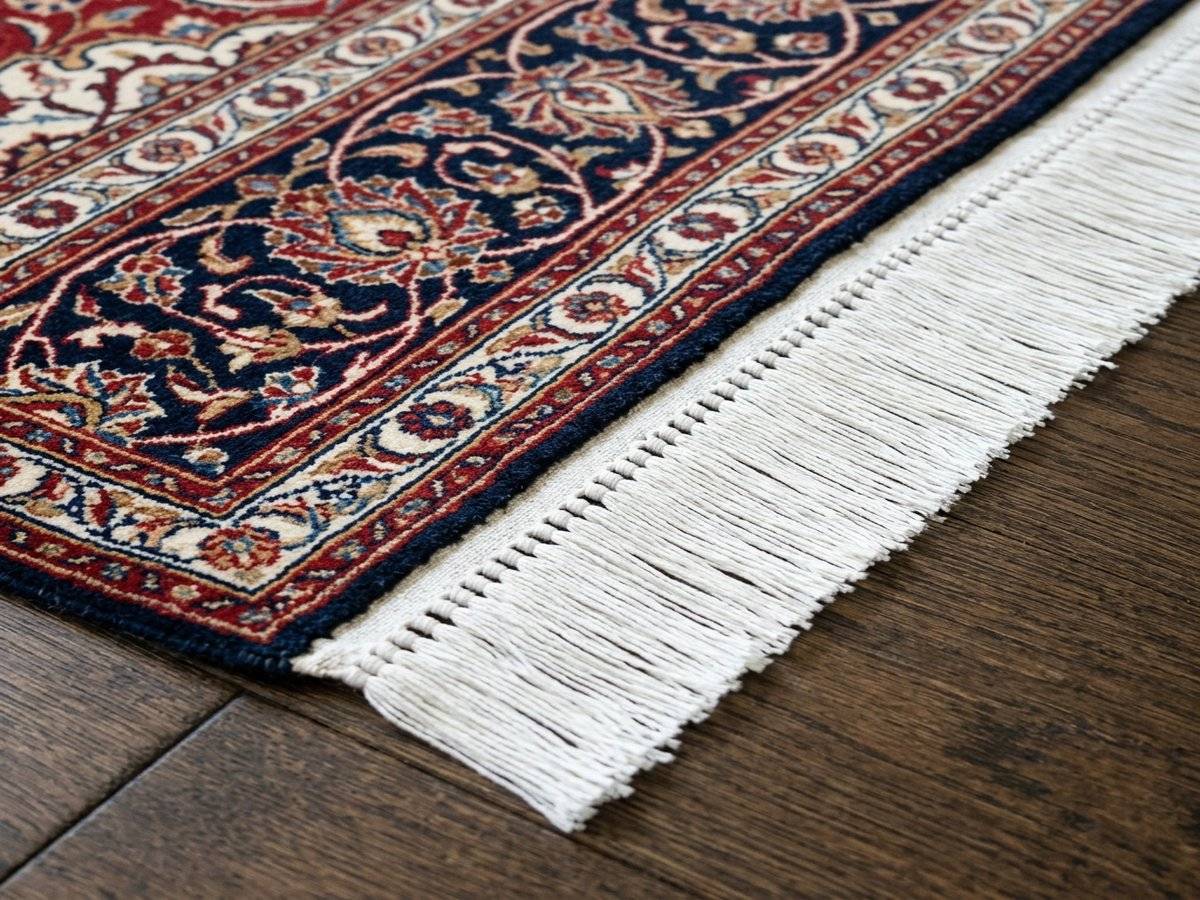
- Check the back of the rug from time to time. An old accident that was never noticed shows up as a stain or a stiff patch on the back.
- Deal with a repeat spot quickly. Pets return to a spot that still smells, even if you cannot smell it.
Frequently Asked Questions
Can pet urine be removed from a Persian rug?
Usually, yes, especially if it is treated quickly. Our cleaning includes careful stain treatment by hand and deodorizing and disinfecting with non-toxic solutions. How completely a stain comes out depends on how long it has been there and on the rug's dyes.
Should I use vinegar or baking soda on a pet stain?
We do not recommend home remedies on a handmade rug. Blot with clean white towels and cool water only, and have the rug professionally washed.
Why does the smell come back after I cleaned the spot?
Urine soaks through the pile into the foundation and often the pad beneath it. Residue left there holds the odor, and humidity brings it back. Only a full wash reaches the foundation.
Can an old pet stain be removed?
It can often be lightened, but an old stain that has changed the color of the wool may not disappear completely. We will tell you what to expect before we start.
Do you pick up rugs with pet stains?
Yes. We offer free pickup and delivery in the Greater Boston area. Let us know about any pet accidents when you request your estimate.