Color is much of what makes a Persian or Oriental rug beautiful, so it is upsetting when it goes wrong: a red that has bled into an ivory field after a spill, a pink haze around a stain, or one half of a rug that has faded while the other half has not. These problems have different causes, and they call for different treatment. Some can be reversed; others can be brought back into balance by a skilled restorer.
This guide explains why rug colors run and fade, how to tell real damage from the natural variation of a handmade rug, what to do right away, and how color is restored.
Color run: when dyes bleed
Color run, or bleeding, is when dye moves out of one color and into the colors around it. It shows as a pink, brown or blue haze spreading into a lighter area, usually around a spill, a pet accident or a patch of water damage.
The common causes are:
- Water that stays in the rug, from a flood, a leak, an overflowing plant or a spill that was not dried. The longer the rug stays wet, the greater the risk.
- Home cleaning, especially with hot water, steam, ammonia, bleach or carpet shampoos made for synthetic carpet. These can loosen dyes that would otherwise be stable.
- Pet urine, which can loosen dyes as well as stain, especially when it is left to dry.
- Unstable dyes. Some rugs, often newer or lower-quality ones, are made with dyes that were never properly fixed. Areas that were repaired or redyed in the past can also be less stable than the rest of the rug.
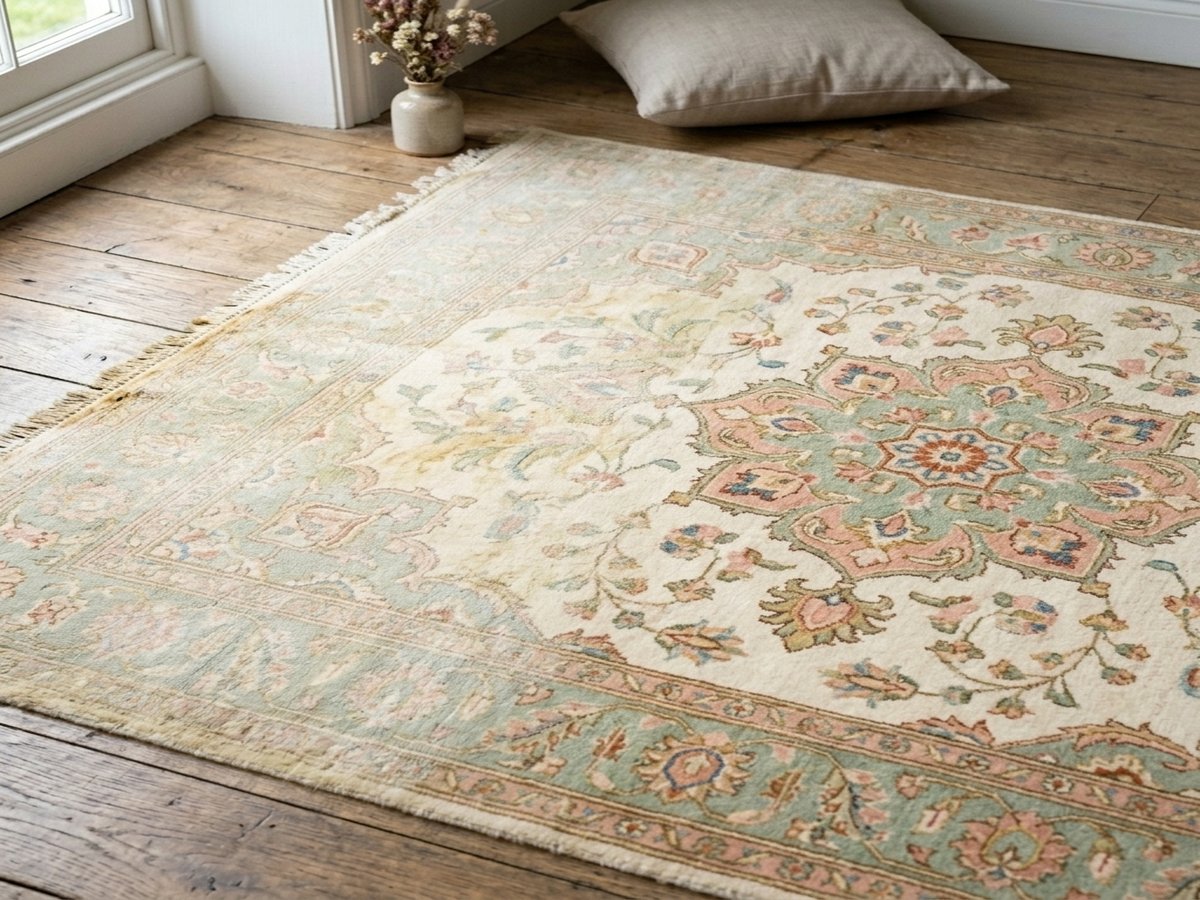
Fading: when color is lost
Fading is a gradual loss of color. It most often comes from sunlight: a rug near a sunny window can fade on one side, or where the sun falls across it every afternoon, while the part under a sofa stays bright. Heavy wear can also make colors look paler, because the tips of the pile wear down and show the lighter wool near the base of the knots.
A simple test is to fold back a corner and compare the front with the back. The back of a rug is protected from light, so a big difference between the front and the back of the same color points to fading.
What is not damage: abrash and patina
Not every change in color is a problem. A handmade rug is dyed in small batches, and wool from different batches takes the dye a little differently. The result is abrash: gentle bands or shifts of shade across the field, especially in a single color such as a red or blue ground. Abrash is a sign of hand-spun wool and natural dyes, and many people value it. You can read more in Beautiful "Flaws" in Persian Rugs and in our article on natural dyes.
In the same way, an old rug's colors soften with age. Natural dyes mellow gracefully rather than fading harshly, and that patina is part of an antique's character. Harsh, patchy color loss is different, and it can be a sign of synthetic dyes or of damage.
What to do the day colors run
- Act while the rug is still wet. Once a run color dries, it is much harder to remove.
- Blot with clean white towels; do not rub, which spreads the dye.
- Lay the rug flat with good air flow, pile side up, so colors are not touching. Never fold or roll a wet rug.
- Do not apply heat, bleach or a spot remover. These can set the dye or strip color from the area around it.
- Call a professional the same day. Colors that have run need prompt professional attention. Our article on what to do when a rug gets wet covers the first hours step by step.
How color is restored
Washing first. At Noor, every rug goes through our 7-step cleaning process, which starts with color testing so the wash is matched to how stable the rug's dyes are. A careful wash can lift dye that has run when it is treated in time, along with the soil and residue that make colors look dull. How completely a run color comes out depends on the dye, the cause and how long it has been there, so we always look before we promise.
Restoring faded or damaged color. Faded areas can be brought back into balance with matching natural dyes, so the faded part sits with the rest of the rug again. Because natural dyes age and change slowly, matching them takes an experienced eye; it is one reason our repairs spin several shades of the same dye together, following Mo Nooraee's Ten Rules of Authentic and Seamless Restoration. Where the pile itself is worn, it can be rebuilt with matching hand-spun wool. See our Oriental rug restoration and repair page and the before-and-after photos in our restoration gallery.
How to protect your rug's colors
- Keep rugs out of strong, direct sun for long periods. Use curtains or blinds at the sunniest times of day, and consider UV-filtering window film.
- Turn the rug end to end once or twice a year, so light and wear fall evenly.
- Blot spills right away with cool, clean water only, and never use household carpet cleaners on a handmade rug; see pet stains on Oriental rugs.
- Never steam clean a Persian rug. Heat and moisture together are the quickest way to make dyes run.
- Have it washed by hand every 3 to 5 years; see how often to clean a Persian rug.
If you are buying a rug, look at the colors closely: harsh or patchy color can be a sign of synthetic dyes. Our article on how to tell an authentic handmade rug explains what to look for.
Frequently Asked Questions
Why did the colors in my rug run?
Usually because the rug stayed wet, from a spill, a pet accident or water damage, or because it was cleaned with hot water, steam or household chemicals. Some rugs also have dyes that were never properly fixed.
Can color bleeding in a rug be fixed?
Often, if it is treated in time. A professional wash, matched to the rug's dyes after color testing, can lift dye that has run. How completely it comes out depends on the dye, the cause and how long it has been there.
Can a faded rug be restored?
Faded areas can be brought back into balance with matching natural dyes, and worn pile can be rebuilt with matching hand-spun wool. Send us photos for a free evaluation.
Are the color bands in my Persian rug a defect?
Probably not. Gentle bands or shifts of shade, called abrash, come from wool dyed in small batches. They are a sign of a handmade rug with natural dyes, not damage.
How do I stop my rug fading in the sun?
Keep it out of strong, direct sun for long periods, use curtains or blinds at the sunniest times of day, and turn the rug once or twice a year so light falls evenly.