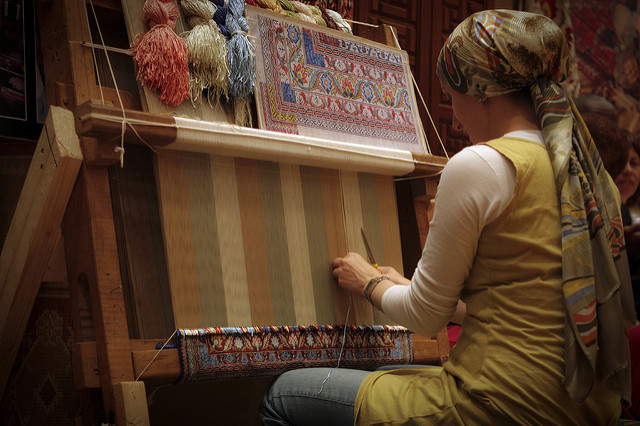
Each hand-woven rug is special in that no two are quite alike; indeed a certain degree of irregularity (or individuality) is to be expected. Variations in color, design, motif or tightness of knotting, are a reminder that a rug was not made by machine, and indeed some “flaws” can add to the attractiveness, intrigue or value of a rug.
Western buyers sometimes note that a pattern has an interrupted motif, or a non-symmetrical layout, or sides not perfectly in alignment. Such instances usually have more to do with cultural norms or personal events rather than the ineptness of the weaver. Weavers as a sign of humility may not correct a flaw in their work; recognizing only God as perfect, they do not wish to appear vain or to be the target of envy.
Often a variation in shade and tint appears horizontally within a single band of color across an Oriental rug. This phenomenon is called abrash, and may be caused by variations in yarn diameter, the use of yarn from different dye lots, uneven exposure to sunlight over time, or by differences in the amount of lanolin in the yarn which affect how well the dye “takes”. Abrash can add stunning dimension to a rug and is considered a very desirable trait in tribal rugs.
Rugs that reach Western markets are usually sold “as is”, because every collector has his/her own tastes. Some perceive the bruises of history on a rug as a vital part of its unique story. Should you wish to a repair a rug, Mr. Nooraee will always ask you to be specific about what aspects of the rug you wish to fix and those you wish to preserve.