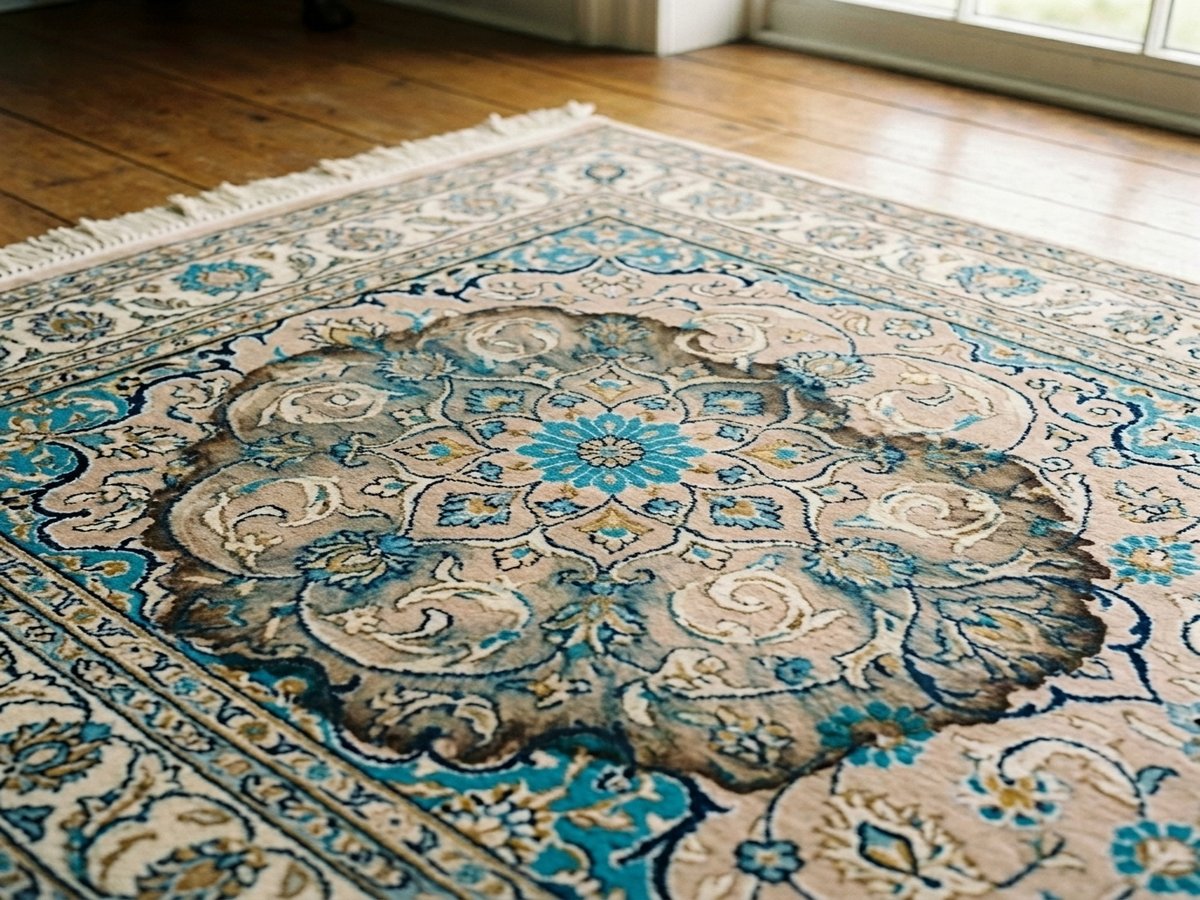
A burst pipe, a leaking radiator, a flooded basement, a houseplant that overflowed for weeks: water reaches rugs in many ways, and a wet handmade rug needs attention quickly. The good news is that most wool rugs survive a soaking if they are dried and cleaned properly. The damage comes from what happens next: dyes that run while the rug stays wet, and a foundation that develops mildew or rot because it never dried.
This guide covers what to do in the first hours, what to avoid, and how a water-damaged Persian or Oriental rug is cleaned and, where needed, repaired.
The first hours: what to do
- Stop the water and get the rug off the wet floor. If it is safe to do so, lift the rug off the floor, or at least fold back the wet part, so neither the rug nor the floor stays soaked. Never handle a rug in standing water near electrical outlets.
- Blot, do not wring. Press clean white towels into the pile to soak up as much water as you can. Wringing or twisting a wet rug can distort it and strain the foundation.
- Let air reach both sides. Lay the rug flat, pile side up, somewhere with good air flow, or drape it over clean supports so air can reach the back. Open windows and run fans if you can.
- Keep the colors apart. If the rug is folded while wet, a dark color can bleed onto a light one where they touch. Keep it flat.
- Photograph everything before anything is moved or cleaned: the rug, the water, the room and the source of the leak. You may need the photos for an insurance claim.
- Call a professional the same day, especially if the rug was soaked through, if the water was dirty, or if you see any color running.
What not to do
- Do not use heat to dry it. A hair dryer, a radiator or a hot dryer can shrink the wool, set stains and harm the dyes. Our rugs are air-dried rather than rushed for the same reason.
- Do not put it in a washing machine or soak it in the bath with household detergent.
- Do not leave it rolled up or folded in a corner to deal with later. A wet rug left rolled can develop mildew in days.
- Do not throw it away before it has been assessed. Many rugs that look ruined can be cleaned and repaired, and for an insurance claim, the rug itself is part of the evidence.
Why water is a problem for a handmade rug
Dye run. Natural dyes are generally stable, but long contact with water, especially warm or dirty water, can make some colors bleed into the colors next to them. A rug may also contain areas repaired or redyed in the past that are less stable than the original. The longer a rug stays wet, the greater the risk. You can read more about how natural dyes in Persian rugs are made and why they behave as they do.
Mildew and dry rot. Most Persian pile rugs are knotted on a cotton foundation. Cotton that stays damp can develop mildew and, over time, dry rot, which weakens the threads until the rug cracks or tears when it is folded. Dry rot often cannot be seen from the front.
Stains and odor. Flood water and water from a leak carry dirt, rust and minerals that leave tide lines when they dry. Water that soaks into a rug pad and the floor underneath can leave a lasting musty smell.
Shrinking and distortion. Wool and cotton react differently to water, so a soaked rug can dry unevenly, ripple or lose its shape.
How a water-damaged rug is cleaned
A wet rug needs a full wash, not just drying, to remove what the water left behind. At Noor, every rug goes through our 7-step cleaning process. For a water-damaged rug, several steps matter most:
- Color testing first, before the rug is soaked, so the wash is matched to how stable its dyes are.
- Gentle hand washing with a biodegradable shampoo, a thorough rinse and slow air drying.
- Careful stain treatment by hand.
- Deodorizing and disinfecting with non-toxic solutions.
- Cotton foundation treatment to help protect against fungal growth and dry rot.
The process takes between 2 and 4 weeks, depending on the rug's size, materials and stains, and we offer free pickup and delivery in the Greater Boston area. How completely a stain or a run color comes out depends on the water, how long the rug was wet and the rug's dyes, so tell us what happened when you request your estimate.
When the rug also needs repair
Washing sometimes shows damage the water caused or uncovered: a foundation weakened by rot, colors that have run, or areas of pile that have worn away. Faded or run colors can be brought back into balance with matching natural dyes, and weakened areas can be rebuilt with matching wool and knots. See our Oriental rug restoration and repair page, and our restoration gallery for a rug restored after water damage. Our article on why rug colors run or fade explains the color side in more detail.
Water damage and insurance
If the water came from a burst pipe, a leak or a storm, your homeowner's policy may cover the rug. Policies differ, so check yours with your insurer. A certified rug appraisal can document a damaged rug's condition and value for a claim, and our article on insuring a Persian rug explains what an appraisal records.
Preventing the next one
- Keep rugs off basement floors, and away from radiators, washing machines and water heaters that could leak.
- Put a saucer under every potted plant on a rug, and check under it now and then: slow leaks from plants cause more damage than people expect.
- Store rugs clean, dry and off the floor; see how to store a Persian rug.
- Have rugs washed every 3 to 5 years, so problems are found early; see how often to clean a Persian rug.
Frequently Asked Questions
Can a Persian rug be saved after a flood?
Often, yes. Wool is resilient, and a rug that is dried and professionally washed soon after the flood has the best chance. Lift it off the wet floor, blot it, let air reach both sides and call a professional the same day.
How quickly do I need to act when a rug gets wet?
As quickly as you can. The longer a rug stays wet, the greater the risk that dyes run and that mildew starts in the cotton foundation. A rug left wet and rolled can develop mildew within days.
Can I dry a wet rug with a hair dryer or heater?
No. Heat can shrink the wool, set stains and harm the dyes. Dry it flat with good air flow and fans, then have it professionally washed. We air-dry rugs rather than rushing them.
Why does my rug smell musty after it got wet?
Water that soaks into the foundation and the pad can leave mildew and residue that smell, especially in humid weather. A full hand wash with deodorizing and a treatment of the cotton foundation addresses the cause, not just the smell.
Will insurance pay for a water-damaged rug?
It depends on your policy and the cause of the water, so check with your insurer. A certified appraisal can document the rug's condition and value for a claim. Photograph the rug and the damage before anything is moved.