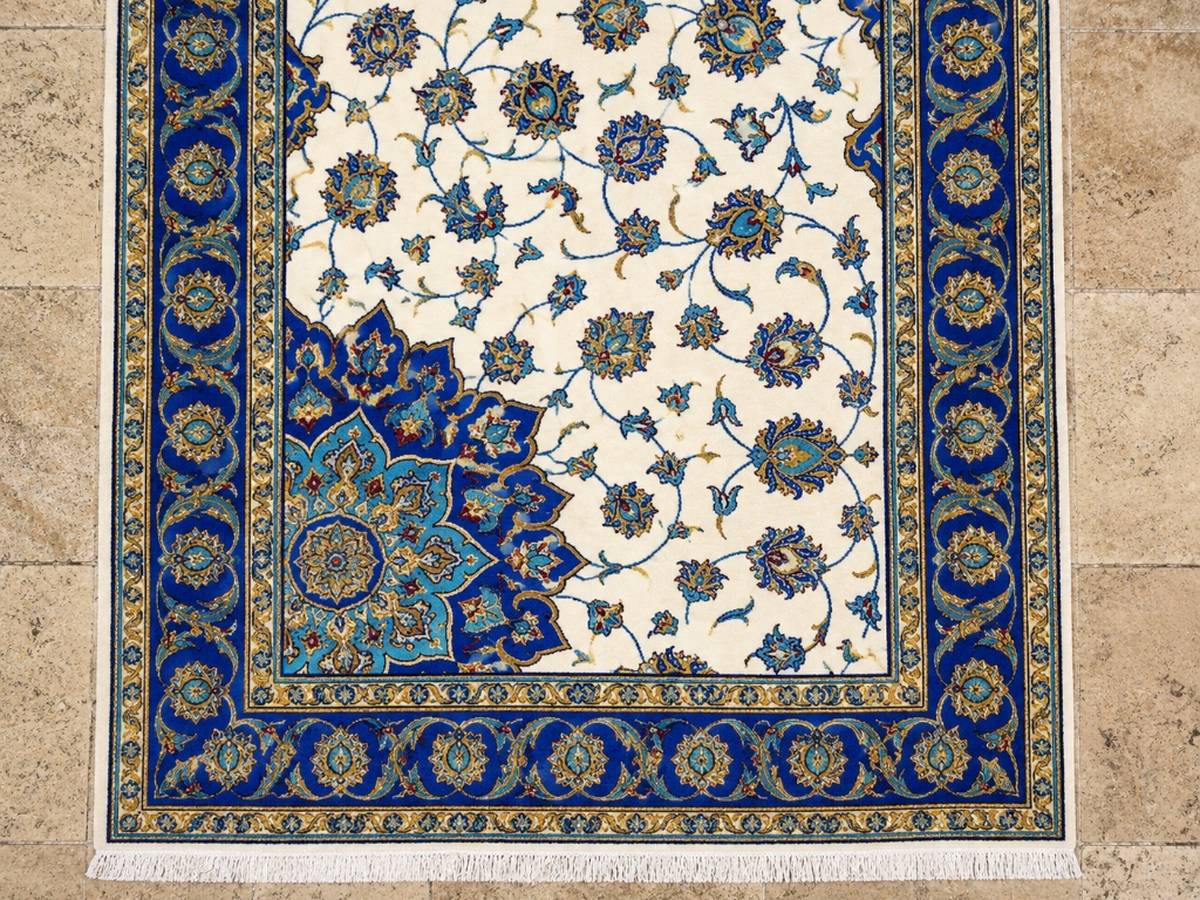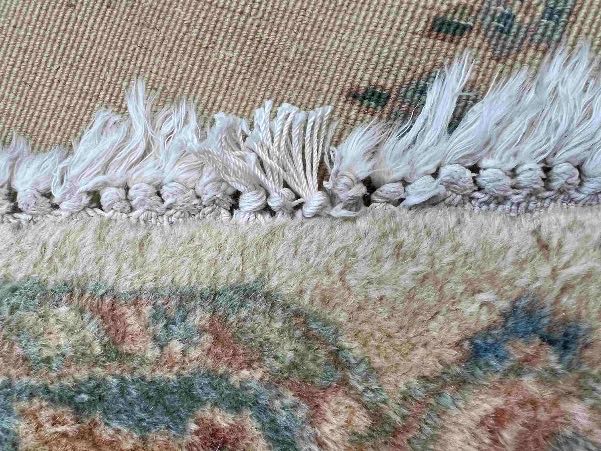
The fringe is often the first part of a rug to look dirty. A white or ivory fringe turns gray, yellow or brown long before the pile looks soiled, and a tangled, dingy fringe can make a beautiful rug look neglected. The temptation is to scrub it or reach for bleach. On a handmade rug, that can do real harm.
This guide explains why a fringe gets dirty, what you can safely do at home, what never to use, and when the fringe needs a professional wash.
Why the fringe matters
On a hand-knotted rug, the fringe is not a decoration sewn on at the end. It is the end of the warp threads that run the whole length of the rug and hold every knot in place. Damage the fringe and, over time, the knots at the ends start to come loose. That is why it needs gentle care. Our guide to rug fringe repair explains the structure in more detail.
Why a fringe turns gray or yellow
- It is usually undyed cotton, so it shows dirt far more than the colored wool pile.
- It sits at floor level and at the edge of the rug, where it catches dust, grit and whatever is tracked in on shoes.
- It meets the vacuum cleaner, which pulls and frays it.
- Old residue and spills can yellow it, and so can some household cleaners.
- Age gives an old cotton fringe a warm, ivory tone that is natural and should not be bleached away.
What you can do at home
- Shake and brush. Lift the end of the rug and shake it gently, or brush the fringe with a soft brush to remove loose dust and grit.
- Comb it straight. Comb a tangled fringe gently by hand or with a wide-toothed comb, working from the rug outward. Do not tug on knots or matted areas.
- Vacuum up to it, not over it. Vacuum the pile up to the fringe and stop. A vacuum's brush is the most common cause of fringe damage.
- Blot spills right away with a clean white towel and a little cool, clean water, then let the fringe dry flat.
What never to use on a fringe
- Bleach. It weakens the cotton and can leave the fringe brittle and patchy. Bleach that wicks into the rug can also strip the color from the first rows of pile.
- Hot water or steam, which can shrink the cotton and make nearby dyes run into the fringe.
- Household stain removers and carpet shampoos. Many contain optical brighteners or harsh chemicals that leave residue and yellow over time.
- Scrubbing. It frays the warps and loosens the knots at the end.
If the fringe is badly stained, or if color from the rug has already bled into it, a home attempt can make things worse. That is a job for a professional wash.
How a fringe is cleaned professionally
A fringe is best cleaned with the rest of the rug. Washing it alone can leave a visible line where the clean fringe meets the soiled pile, and it can wet the end of the rug unevenly.
In a professional hand wash, the whole rug, fringe included, is dusted, color-tested and washed with a gentle, biodegradable shampoo, then rinsed thoroughly and air-dried. Stains are treated by hand. A gray fringe usually brightens noticeably. At Noor, every rug goes through our 7-step cleaning process; our article on how a Persian rug is hand washed explains each step.
Cleaning or repair?
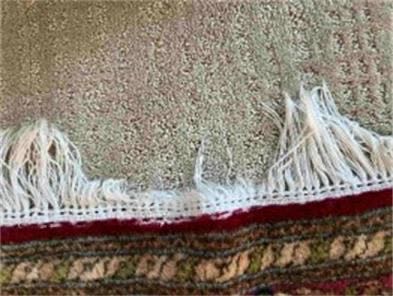
Cleaning will not fix a fringe that is worn away. Check for these signs, which mean the fringe needs repair, not just washing:
- Fringe strands are missing or broken, leaving gaps.
- The band of flat weave or knots at the end is worn through.
- Knots at the end of the rug are loose, or tufts of pile come away when you run your hand along the edge.
A fringe can be secured to stop the unravelling, or rebuilt; see rug fringe repair and the terms in rug repair terms, explained. Washing often reveals these problems, and it is the right time to deal with them.
Keeping a fringe clean
- Take off outdoor shoes, and use a doormat so less grit reaches the rug.
- Turn the rug end to end once or twice a year so both fringes share the wear.
- Use a rug pad, so the ends do not shift and catch.
- Have the rug professionally washed every 3 to 5 years; see how often to clean a Persian rug.
Frequently Asked Questions
How do I clean the fringe on my Persian rug?
Shake or brush out loose dirt, comb it gently, and blot spills with cool, clean water. For a gray or stained fringe, have it washed with the rest of the rug in a professional hand wash.
Can I bleach a rug fringe?
No. Bleach weakens the cotton warps, can leave the fringe brittle and patchy, and can strip color from the pile next to it.
Why is my rug fringe turning yellow?
Usually because of old residue, spills or household cleaners, or simply age. A professional wash removes residue; the natural ivory tone of an old cotton fringe is part of its age and should not be bleached away.
Should I vacuum the fringe?
No. Vacuum the pile up to the fringe and stop. The vacuum's brush catches the fringe and is the most common cause of fringe damage.
Can the fringe be cleaned without washing the whole rug?
It is best cleaned with the whole rug. Washing the fringe alone can leave a visible line where it meets the pile and can wet the end of the rug unevenly.