A handmade Persian or Oriental rug is not cleaned like wall-to-wall carpet. Its wool is natural, its dyes are natural or carefully fixed, and its foundation is usually cotton. Hot water, steam, harsh detergents and fast drying can all damage it. That is why fine rugs are washed by hand, slowly, with each step matched to the rug.
This guide walks through what a professional hand wash involves, step by step, why each step matters, and what to expect when you send a rug to be washed.
Why hand washing, not steam cleaning
Steam cleaning and carpet shampooing push hot water and chemicals into the pile and pull only some of it back out. On a handmade rug that can make dyes run, shrink the wool and cotton, strip the lanolin that keeps good wool soft and resilient, and leave residue that attracts dirt. A wet foundation that does not dry properly can develop mildew. That is why we never recommend steam cleaning a Persian rug.
A hand wash does the opposite: it removes the grit first, uses gentle, biodegradable shampoo, rinses thoroughly, and lets the rug dry slowly in air.
The steps of a professional hand wash
At Noor, every rug goes through our 7-step green cleaning process, tailored to its materials, condition and needs.
1. Thorough dusting
Most of the dirt in a rug is dry grit, sand and dust deep in the pile, not surface stains. Grit acts like sandpaper on the wool every time the rug is walked on. Before any water touches it, the rug is thoroughly dusted to remove that embedded dirt. Washing a rug that still holds its grit only turns the grit into mud.
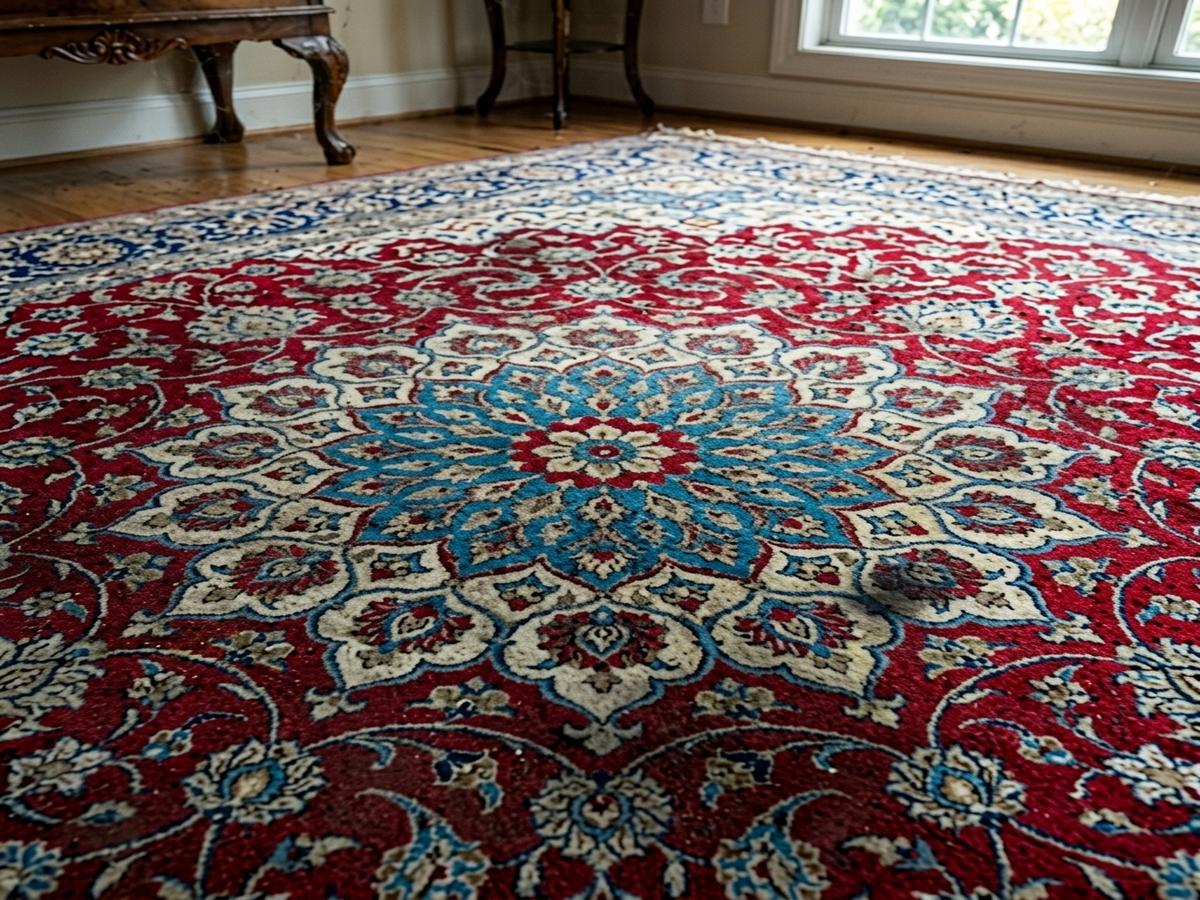
2. Color testing, then gentle hand washing
Before the rug is soaked, the colors are tested for colorfastness, one by one. The result decides how the rug is washed: how much water, what temperature and how long. The rug is then washed by hand with a gentle, biodegradable shampoo that cleans the wool without stripping its natural oils, and rinsed thoroughly so no residue is left behind.
3. Careful stain treatment
Stains are treated by hand, each according to what it is, and a stain inhibitor is applied to help protect the fibers against future staining. How completely a stain comes out depends on what it is, how long it has been there and the rug's dyes. Pet accidents need extra care; see pet stains on Oriental rugs.
4. Deodorizing and disinfecting
Non-toxic solutions are used to eliminate odors and disinfect the rug. This matters most for rugs that have had pet accidents, water damage or long storage.
5. Cotton foundation treatment
Most Persian rugs are knotted on a cotton foundation. The foundation is treated to help protect it against fungal growth and dry rot, the slow decay that weakens cotton that has been damp. See what to do when a rug gets wet.
6. Mothproofing
A mothproofing treatment is applied to the wool and silk fibers to help protect them from moth damage. See moth damage in wool rugs.
7. Fiber conditioning and rejuvenation
Finally, the wool is moisturized and reconditioned to help restore its natural luster and softness. Then the rug is air-dried. It is not rushed, because drying a wet rug too fast or too hot can harm the wool and the dyes.
The fringe and the sides
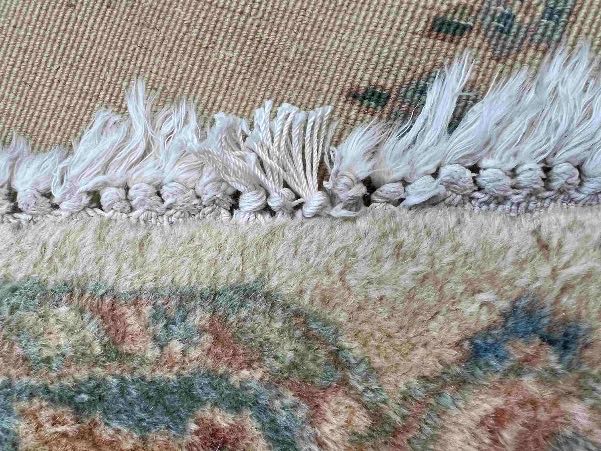
The fringe is washed with the rest of the rug. A gray or dingy fringe usually brightens with a proper wash, but it should never be bleached, which weakens the cotton. See our guide to cleaning a rug fringe. If the wash shows that the fringe or the sides are worn through, that is the time to secure them; see rug fringe repair.
Antique, silk and fragile rugs
Older and finer rugs need the most care. Silk is handled differently from wool, and an antique rug with a fragile foundation is washed more gently than a sturdy village rug. Washing sometimes reveals problems that dirt was hiding: a weak spot in the foundation, moth damage under a piece of furniture, or a fringe that has started to unravel. When that happens, we tell you before going further.
How long it takes
The full process takes between 2 and 4 weeks, depending on the rug's size, materials and stains. A large room-size rug takes longer to wash, rinse and dry than a small rug or a runner; silk and fragile rugs are worked on more slowly; and heavy stains or pet accidents need extra treatment. We offer free pickup and delivery in the Greater Boston area.
What a wash can do, and what it cannot
A careful wash removes grit, soil and residue, brightens colors that dirt was dulling and restores the wool's softness. You can see real results in our article on Persian rug cleaning before and after. A wash cannot rebuild worn pile, holes or a lost fringe; those need restoration and repair. Old stains, colors that have already run and sun fading may improve but not disappear entirely; see why rug colors run or fade.
How often to wash
Most handmade rugs need a professional hand wash every 3 to 5 years: sooner in busy rooms and homes with pets or children, later in quiet rooms. See how often to clean a Persian rug for the signs that a rug is due.
Frequently Asked Questions
How is a Persian rug professionally cleaned?
It is dusted thoroughly to remove grit, its colors are tested, and it is washed by hand with a gentle, biodegradable shampoo, rinsed thoroughly and air-dried. Stains are treated by hand, and the rug is deodorized, mothproofed and conditioned.
Can a Persian rug be steam cleaned?
We never recommend it. Steam and hot water can make dyes run, shrink the wool and cotton and leave residue in the pile. A hand wash with gentle shampoo and slow air drying is the safe way to clean a handmade rug.
How long does it take to hand wash a rug?
Our process takes between 2 and 4 weeks, depending on the rug's size, materials and stains. Rugs are air-dried rather than rushed.
Will hand washing make my rug's colors run?
Not when the colors are tested first and the wash is matched to the rug. Color testing before soaking is the first step of our hand wash.
Do you pick up and deliver rugs?
Yes. We offer free pickup and delivery in the Greater Boston area. Request a free estimate with your rug's size and details.