Rug repair has its own vocabulary, and it can be confusing. Two restorers may use different words for the same job, and the same word can mean different things in different shops. If you are trying to find someone to fix a worn or damaged Oriental rug, it helps to know what each term means, what the work involves, and when it is the right choice.
This glossary explains the terms you are most likely to meet, from the most common to the most specialized. Each one links to where you can see the work.
First: how a hand-knotted rug is built
Every repair makes more sense once you know the structure. A hand-knotted rug has a foundation of warp threads, running the length of the rug, and weft threads, woven across between the rows. The pile is made of short lengths of wool tied as knots around pairs of warps and cut to an even height. The fringe is the ends of the warps. The sides, or selvedges, are the outer warps, wrapped with yarn. Our guide to how rugs are woven shows this in more detail.
Damage happens to one or more of these parts, and each repair works on one of them.
Repairs to the pile
Reweaving (pile reweaving, reknotting). Tying new knots of wool into the foundation to replace pile that has been worn away, eaten by moths or lost in a hole. The new knots use the same knot as the original (Turkish or Persian), the same density and wool spun and dyed to match, so the new area wears at the same rate as the old. This is the core of most serious restoration work.
Renapping. A term used by many people for restoring worn pile. "Nap" is another word for pile, so renapping means putting pile back where it has worn thin or bare. On a hand-knotted rug, the proper way to do that is reweaving: tying new knots into the original foundation. If someone offers to "renap" a fine rug, ask how. The answer should involve hand-knotting with matching wool, not glue or a patch.
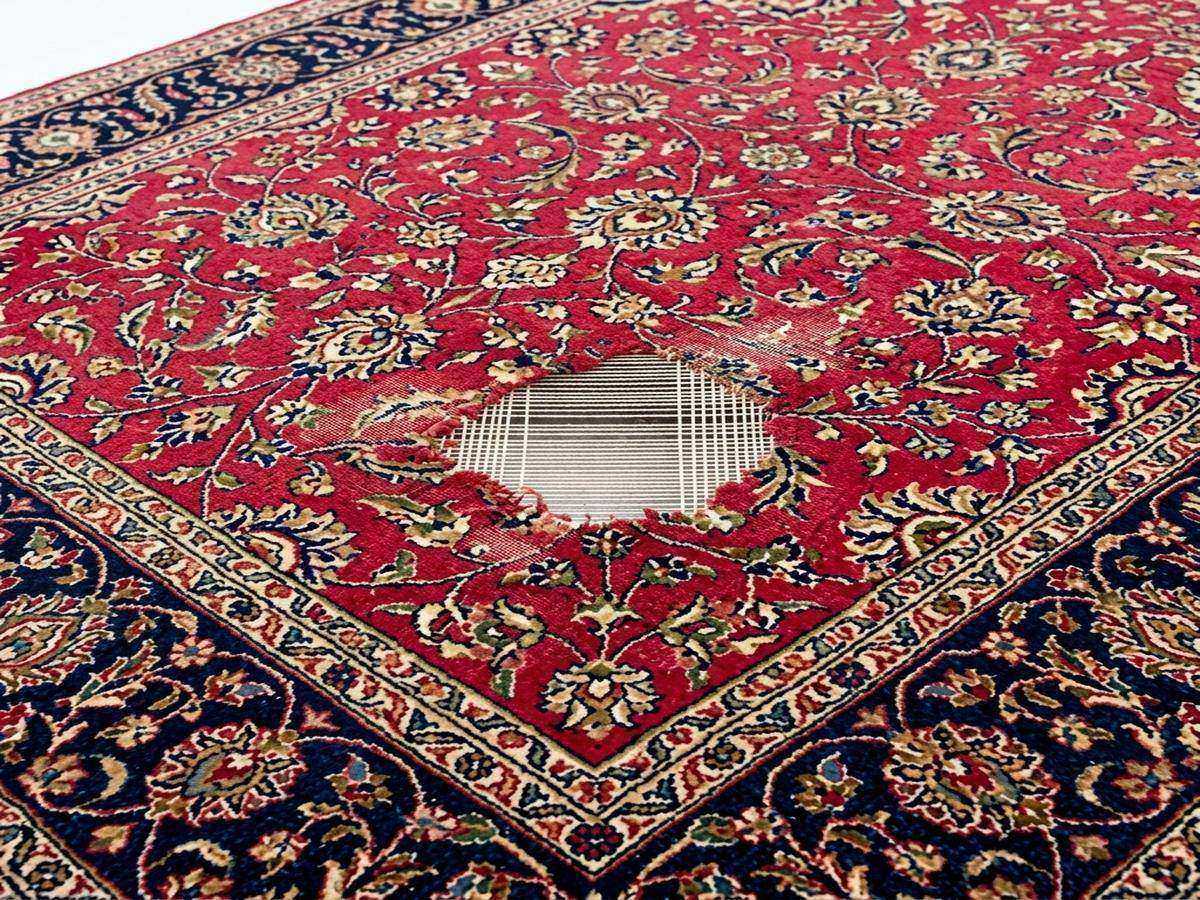
Hole repair. A hole goes through the pile and the foundation. The missing warps and wefts are rebuilt first, then the pile is reknotted, knot by knot. A clean tear can sometimes be closed and secured without rebuilding a large area.
Moth damage repair. Moth larvae eat the pile and, if left long enough, the foundation. The rug is washed and mothproofed first, then the damaged areas are reknotted or rebuilt from the foundation up. See our article on moth damage in wool rugs.
Repairs to the ends
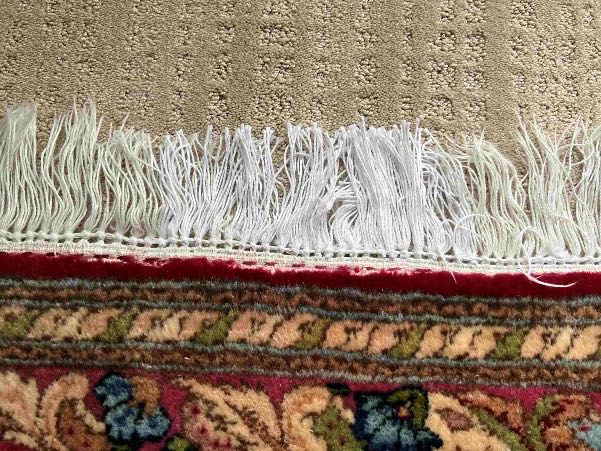
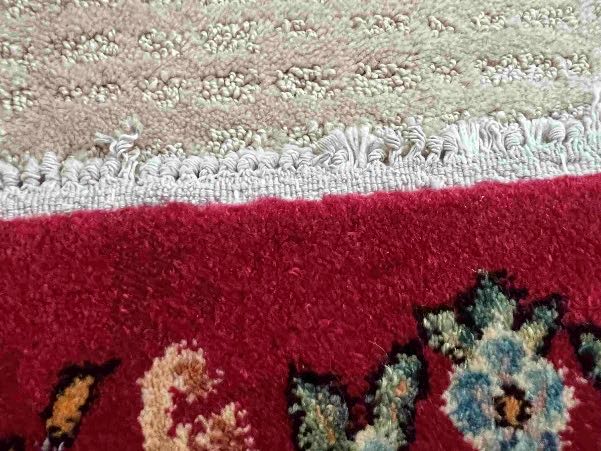
Re-fringing. Replacing or rebuilding a worn fringe. On a hand-knotted rug, the fringe is the end of the warp threads, so a proper repair works with the warps themselves. A fringe sewn on as a separate strip is how machine-made rugs are finished; on a handmade rug it hides the problem rather than fixing it.
Securing the ends (end binding, locking the ends). Stitching and locking the last rows of knots so no more come loose. A modest repair that stops a rug unravelling from the ends inward.
Sarbafi reconstruction. Our term for rebuilding the foundation warp threads at the end of a rug, so the lost rows can be knotted back in and the rug ends in a new, uniform fringe that secures the edge. It returns the rug to its original length and shape, rather than simply stopping the damage. See our guide to rug fringe repair.
Repairs to the sides
Overcasting (side binding, re-siding, selvedge repair). Rewrapping the sides of the rug with matching wool, to protect the outer warps and stop the sides fraying and the outer knots loosening. It is a modest repair that protects the whole rug and is worth doing as soon as fraying appears.
Repairs to color
Color restoration (dye matching, color conservation). Bringing faded or damaged color back into balance with matching natural dyes, so a faded area sits with the rest of the rug again. Because natural dyes age and change slowly, matching them takes an experienced eye. See why rug colors run or fade.
Color run treatment. Treating dye that has bled from one color into another, usually after water damage or a spill. This is a cleaning problem first, and it needs prompt attention; see what to do when a rug gets wet.
Terms to be careful with
Patching. Sewing or gluing a piece cut from another rug over a damaged area. It can be a quick fix for an inexpensive rug, but on a fine rug it shows, wears differently and lowers value.
Painting or dyeing the pile. Coloring worn areas with dye or ink so the foundation threads do not show. It hides wear for a while but is not a repair, and it can make an honest old rug harder to value.
Gluing and latex backing. Holding loose knots or a split in place with glue or a coated backing. It is how some machine-made rugs are made, not how a hand-knotted rug should be repaired.
Cutting and rebinding. Cutting away a damaged end or side and binding the new edge. It shortens or narrows the rug and changes its proportions; on a valuable rug, rebuilding is usually the better choice.
Questions to ask any rug restorer
- Will you use the same knot as the original, and wool spun and dyed to match?
- Will the repair be knotted into the original foundation?
- Will you wash the rug first, so we can see all the damage?
- What will the repair look like, and how will it wear?
- Can I see examples of your finished work?
At Noor, restoration follows Mo Nooraee's Ten Rules of Authentic and Seamless Restoration: wool from the same region, hand-spun and organically dyed, the same knot and yarn thickness as the original, and nothing done to change the rug's integrity or make it look younger. Our article on rug conservation vs restoration explains why. See finished work in our restoration gallery, and our Oriental rug restoration and repair page for the services we offer.
Frequently Asked Questions
What is rug renapping?
Renapping means restoring worn or missing pile. On a hand-knotted rug, the proper way to do it is reweaving: tying new knots of matching wool into the original foundation, using the same knot and density as the rest of the rug.
What is the difference between reweaving and patching?
Reweaving ties new knots into the rug's own foundation, so the repair is part of the rug and wears with it. Patching covers damage with a piece from another rug, which shows, wears differently and lowers the value of a fine rug.
What is overcasting on a rug?
Overcasting rewraps the sides of a rug with matching wool to protect the outer warps and stop fraying. It is a modest repair that is worth doing as soon as the sides start to wear.
Who can repair an Oriental rug?
Look for a restorer who reknots damaged areas by hand with matching wool and the original knot, washes the rug first, and can show finished work. Ask the questions in this guide before agreeing to any repair.
How much does rug repair cost?
It depends on the type of damage, its size and the rug's knot density. Email photos of the damaged areas to info@noororientalrugs.com for a free evaluation.