"How old is it, and where is it from?" are the first questions most people ask about a rug, especially one they have inherited. They are also the questions that most affect its value. A rug's age and origin are rarely written on it, and labels and family stories are not always right. Instead, an appraiser reads the rug itself: its structure, materials, colors, design and wear.
This guide explains what an appraiser looks at, what can and cannot be known for certain, and what you can check yourself before you ask for an appraisal.
Why age and origin matter
Origin tells you what a rug is: a Persian rug woven in Iran, a Persian-style rug woven in India or Pakistan, a Caucasian village rug, a Turkish kilim. Age tells you how scarce it is. Together, with condition, they shape most of a rug's value. Age is of high value in a handmade rug, and a good antique in sound condition is scarce. That is why a certified rug appraisal documents origin, age, weaving style, dimensions, materials and condition.
What an appraiser looks at
1. The structure on the back
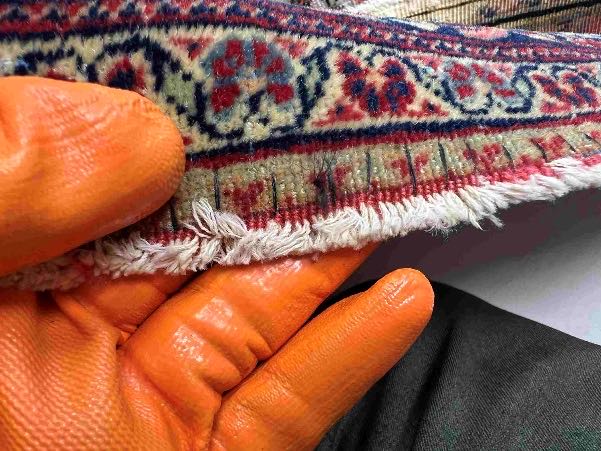
Turning a rug over is the single most useful step. The back shows:
- Whether the rug is hand-knotted at all. On a hand-knotted rug the pattern shows clearly on the back, knot by knot. A canvas or coated backing means it is not. Our article on how to tell an authentic handmade rug explains the checks.
- The knot. Weavers in different regions traditionally tie different knots: the symmetrical (Turkish) knot or the asymmetrical (Persian) knot. The knot alone does not prove an origin, but it narrows the possibilities.
- Knot density. Fine city rugs are densely knotted; village and tribal rugs are usually coarser. Density helps to separate one weaving center from another.
- The foundation. Cotton warps and wefts are typical of many Persian city rugs; wool foundations are typical of many village and tribal rugs. How many wefts pass between each row of knots, and how tightly they are packed, are further clues.
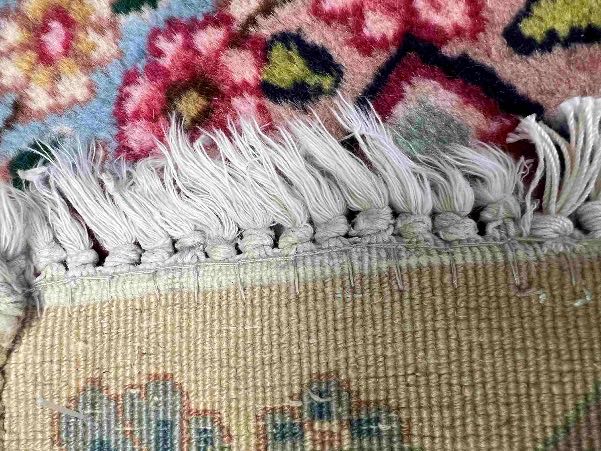
2. The ends and sides
How a weaver finished the ends and sides often follows local habits: the type of fringe, a band of flat weave at the ends, how the sides are wrapped. Later repairs, rebinding or cutting also show here, and they matter for condition and value.
3. The wool
Hand-spun wool is slightly uneven and has a living texture; machine-spun wool is perfectly regular. The feel and luster of the wool, its softness and its lanolin, say a good deal about where and how well a rug was made. Our article on mountain wool explains why.
4. The dyes
Natural dyes and synthetic dyes behave differently with age. Natural dyes mellow gradually and show gentle shifts of shade, called abrash. Some early synthetic dyes fade harshly or turn a different color. The colors on the front, compared with the protected colors deep in the pile and on the back, help to date a rug. See Natural Dyes in Persian and Oriental Rugs.
5. The design
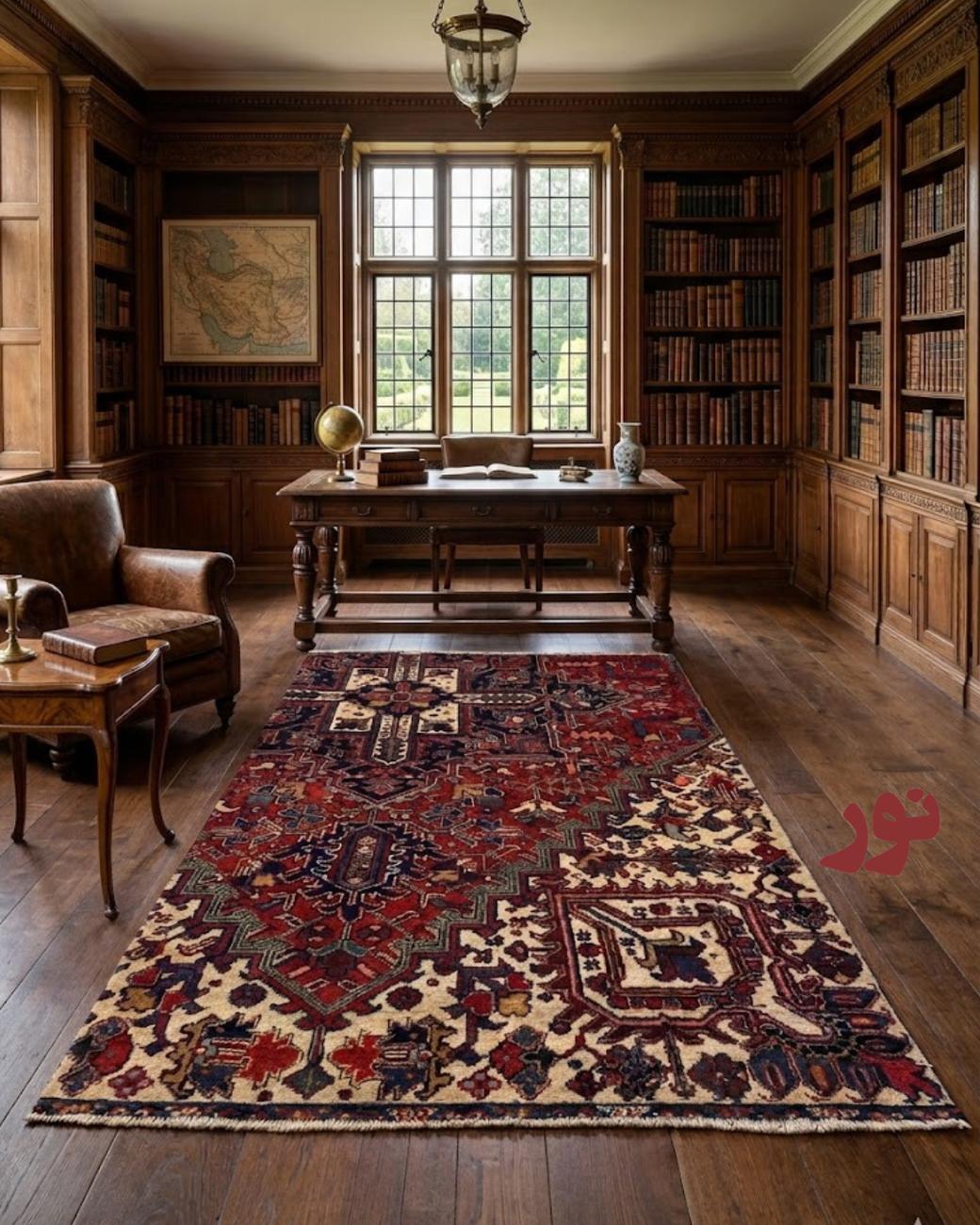
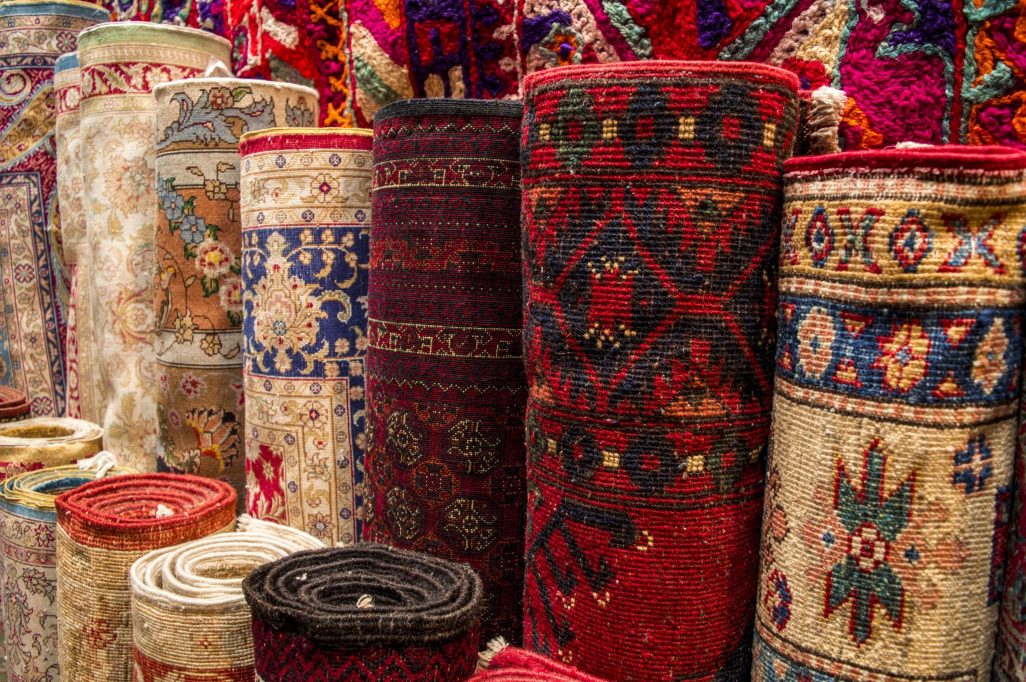
Designs are strongly linked to places: the medallion of a Kashan, the bold geometry of a Kazak, the repeating guls of a Bokhara, the panels of a Bakhtiari. But many classic designs are woven far from home today, so the design is a clue to the tradition, not proof of where a rug was woven. Our guide to Persian and Oriental rugs explains how rugs are classified, and our guides to Bokhara and Kazak rugs explain two traditions in detail.
6. Wear, repairs and condition
How a rug has worn tells its own story. Even, gentle wear and softened colors fit an old rug that has been used and cared for. Repairs, patches, painted areas, a rug that has been cut down, or a chemical wash to make a rug look older are all things an experienced eye looks for, because they affect value.
What cannot be known for certain
Honest appraisers are careful with dates. Most rugs are dated within a range ("late 19th century", "about 1920s-1930s", "mid-20th century") rather than to a year, because rugs were rarely signed or dated. A few rugs carry a woven date or signature, but even those must be read carefully. A good appraisal states what is known and how confidently.
The same is true of origin. A rug can often be placed in a region or a weaving tradition with confidence, and sometimes in a particular town or group. Where the evidence points two ways, a careful appraisal says so.
Labels, tags and family stories
Old labels, store tags and receipts are useful clues, but they are not proof. A tag may say "Persian" when the rug is Persian-style, or give a trade name rather than an origin. Family stories often hold real history, but details can shift over the generations. Keep everything you have, and share it with the appraiser along with the rug.
What you can check yourself
- Turn the rug over and look for knots and a clear pattern on the back.
- Look at the fringe: is it the end of the warps, or sewn on?
- Feel the wool and look at the colors on the front and back.
- Measure the rug without the fringe.
- Gather any labels, receipts, earlier appraisals and what you know of its history.
If the rug is inherited, our guide to inherited estate rugs explains what to do before you clean, sell, divide or donate it.
How a Noor appraisal works
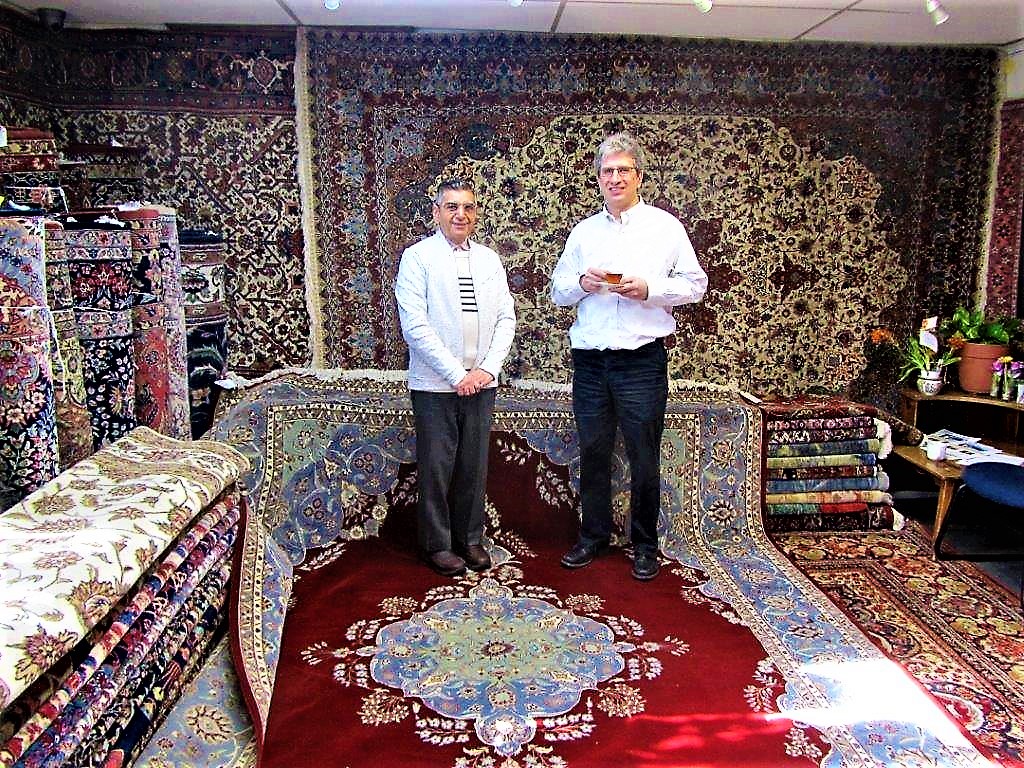
Appraisals are prepared by Mohammad "Mo" Nooraee, a member of the New England Appraisers Association. We take pictures and measurements of the rug and prepare a detailed document that includes the rug's origin, age, weaving style, dimensions, materials and condition, and its estimated monetary value. It usually takes 1 to 2 weeks to issue the final document. To start, send photos of the front, the back close enough to see the knots, the corners, fringe and sides, and any damage, with the rug's length and width. See certified rug appraisals for the details, including appraisals for insurance, estates and donations.
Frequently Asked Questions
How can you tell how old an Oriental rug is?
An appraiser looks at the structure on the back, the knot and foundation, the wool, the dyes, the design and the way the rug has worn. Most rugs are dated within a range, such as "late 19th century", rather than to an exact year.
How do you find out where a rug was made?
The knot, knot density, foundation materials, the finish of the ends and sides, the wool, the dyes and the design all point to a region or weaving tradition. The design alone is not enough, because many classic designs are woven in other countries today.
Is a rug's label proof of its origin?
No. Labels and tags are useful clues, but a label may give a trade name or call a Persian-style rug "Persian". An appraiser checks the rug itself.
What makes a rug an antique?
A rug is generally called antique when it is about 100 years old or more. Age adds value when the rug is in sound condition; condition matters as much as age.
What does a rug appraisal include?
Ours includes the rug's detailed specifications, its origin, age, weaving style, dimensions, materials and condition, and its estimated monetary value. It usually takes 1 to 2 weeks to issue.