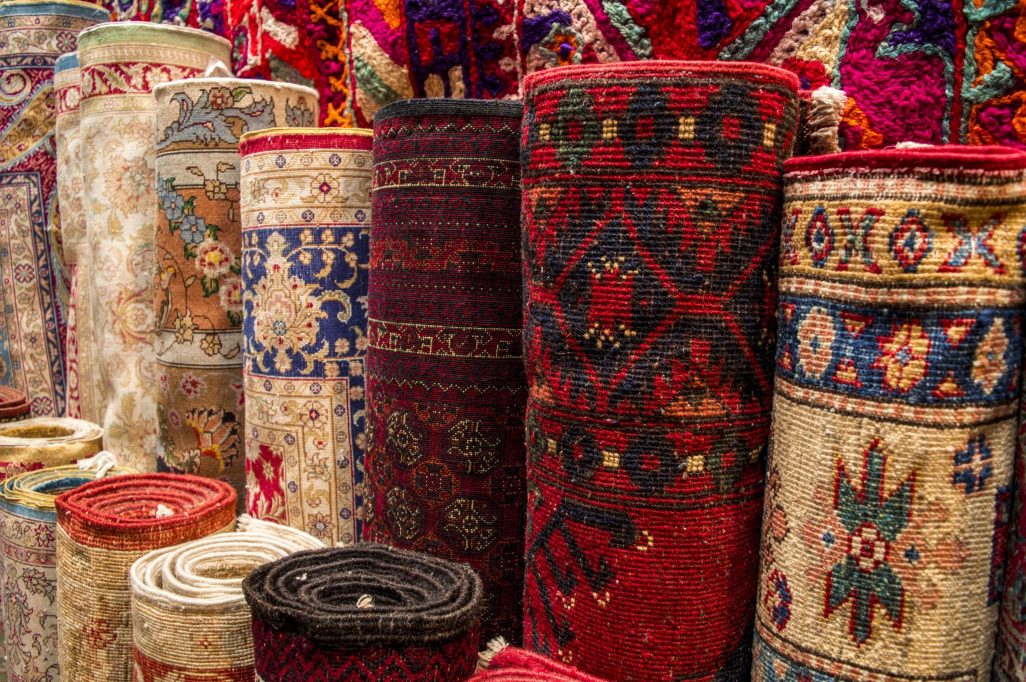
"Oriental rug" is a wide term. It covers handmade rugs woven across a great arc of the world, from Turkey and the Caucasus through Iran and Central Asia to India, Pakistan and China. Persian rugs are the best known, but they are only one family among many. Each region has its own wool, knots, colors and designs, and once you know the main families, a showroom full of rugs starts to make sense.
This guide introduces the main types of Oriental rugs by region and by weave, and how to tell them apart.
Oriental vs Persian
Oriental rug usually means a handmade rug, knotted or flatwoven, from Asia or the regions around it. Persian rug means a handmade rug woven in Iran, historically Persia. So every Persian rug is an Oriental rug, but not every Oriental rug is Persian. A rug woven in a Persian design in India or Pakistan is a real handmade rug, but it is Persian-style, not Persian. Our article on how to tell an authentic handmade rug explains why the difference matters.
Persian rugs (Iran)
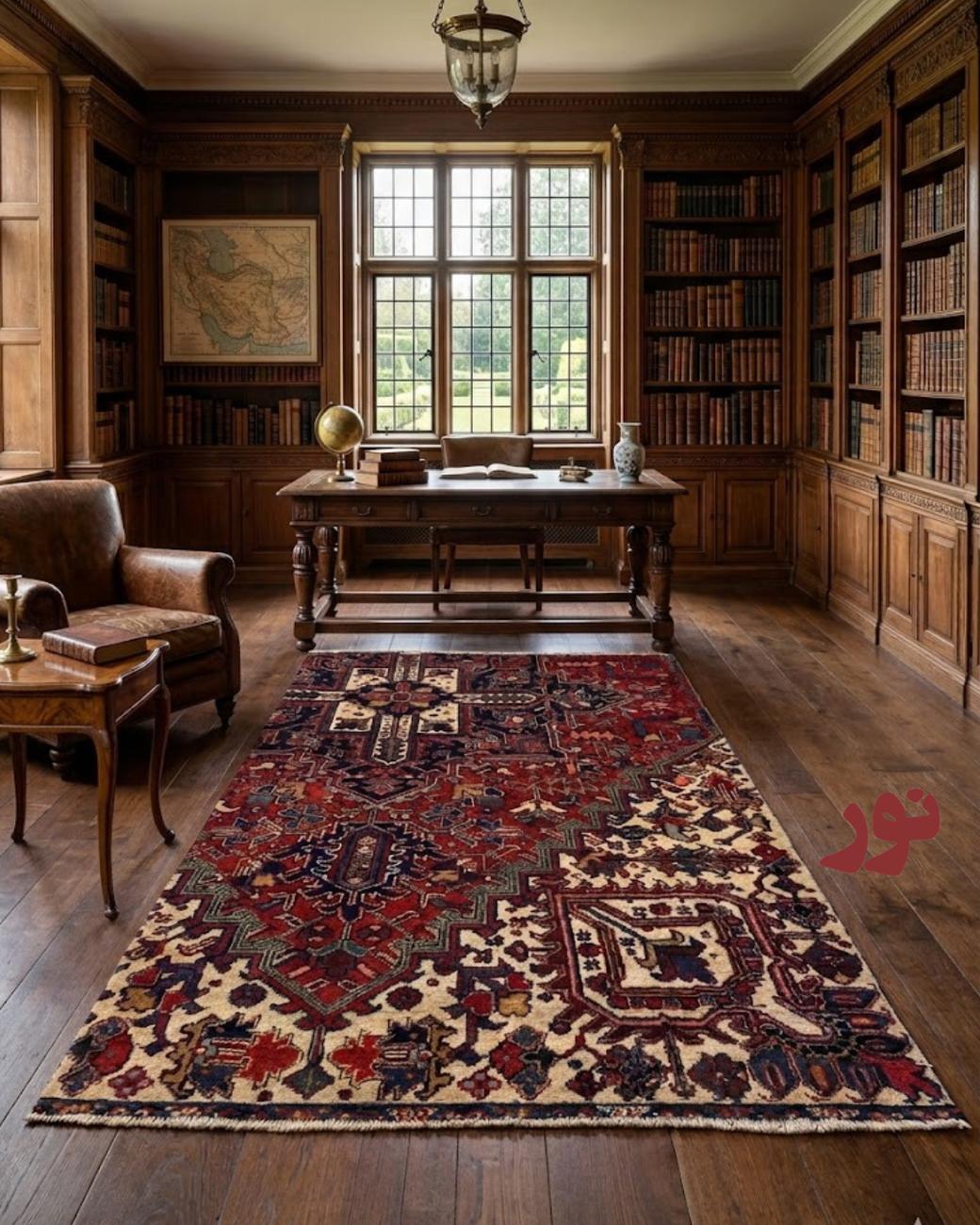
The richest and most varied tradition. Within Iran, a rug is named for the town, region or tribe that wove it: city rugs such as Tabriz, Kashan, Isfahan, Nain, Kerman and Sarouk, with fine knotting and curving floral designs; village rugs such as Heriz, Hamadan and Bakhtiari, bolder and more geometric; and tribal rugs such as those of the Qashqai. Our guide to Persian and Oriental rugs describes the best-known names one by one.
See our Persian rugs, and our Tabriz, Kashan and Bakhtiari rugs.
Caucasian rugs
Village rugs from the Caucasus, between the Black Sea and the Caspian, are known for bold, large-scale geometric designs, strong reds, blues and ivory, and lustrous wool. The best-known group is the Kazak, named after a town in the southern Caucasus; others take their names from places such as Shirvan and Kuba. The Kazak tradition is also woven today in Turkey, India and elsewhere. Read our Kazak rug buyer's guide and see our Kazak rugs.
Turkish (Anatolian) rugs
Turkey has one of the oldest weaving traditions in the world, in pile rugs and in flatweaves. Turkish village rugs are often geometric, with bold color and stylized motifs, and Turkish weavers traditionally tie the symmetrical knot, which is also called the Turkish knot. Turkey is also one of the great homes of the kilim; many of our kilims were woven there.
Turkmen and Bokhara rugs (Central Asia)
The Turkmen tribes of Central Asia wove rugs with rows of repeating medallions, called guls, usually on a deep red field. Western traders called them Bokhara rugs, after the market city of Bukhara. The tradition is woven today in Central Asia, Afghanistan and Pakistan. Read Bokhara rugs and Turkmen guls and see our Bokhara and Turkmen rugs.
Afghan rugs
Afghanistan has its own Turkmen weaving traditions, with deep reds and repeating guls, and it is also known for rugs woven with hand-spun wool and natural dyes in classic designs. Each of our rugs' pages states its country of origin.
Indian rugs
India has woven fine rugs for centuries, and today it is one of the largest producers of handmade rugs. Many Indian rugs are woven in classic Persian designs, such as Kashan and Bakhtiari, and are labeled, for example, "Indo-Kashan". Others, often called Agra rugs after the historic weaving city, have their own character. A good Indian hand-knotted rug is a real handmade rug, but it is Persian-style rather than Persian, and it is priced differently.
Pakistani rugs
Pakistan is known especially for rugs in the Turkmen and Bokhara tradition, with repeating guls, and for rugs in classic Persian and Caucasian designs. As with Indian rugs, the design name and the country of origin should both be stated.
Chinese and Tibetan rugs
Chinese rugs have a very different look: open fields, flowers, medallions and symbols drawn in a distinct style, often in softer colors, and sometimes with the pile carved around the motifs. Tibetan rugs are traditionally woven with a different knotting technique and have a thick, soft pile and bold, simple designs.
By weave: pile rugs and flatweaves
Across all these regions, rugs fall into two broad groups:
- Pile rugs are made of knots of wool, or sometimes silk, tied around the warp threads and cut to form a soft pile. Most Persian rugs are pile rugs.
- Flatweaves have no knots and no pile: the colored wefts form the design. The kilim is the best known; others include soumak and dhurrie. Read What Is a Kilim Rug? and see our kilim rugs and runners.
By setting: city, village and nomadic rugs
The same three categories run through every region. City rugs are woven in workshops from drawn designs, usually finely knotted with curving florals. Village rugs are woven at home, often from memory, with bolder, more geometric designs. Nomadic and tribal rugs are woven on portable looms from the weavers' own wool, and are the most personal of all. Neither is better: they are different traditions. Small irregularities are part of the character of village and tribal rugs, as we explain in Beautiful "Flaws" in Persian Rugs.
How to tell them apart
- The design points to a tradition, but not proof of where a rug was woven.
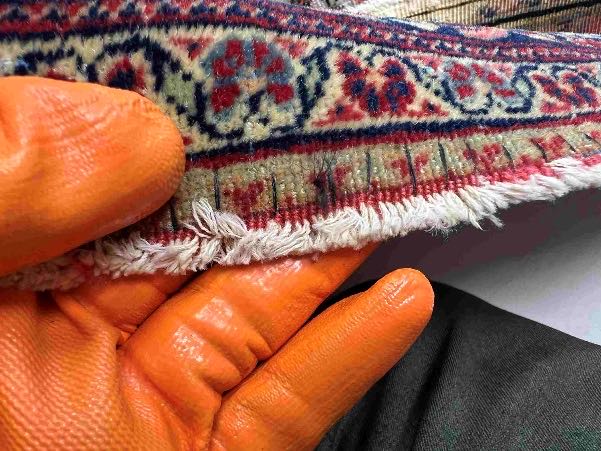
- The knot and the foundation, seen on the back, narrow the possibilities.
- The wool and the dyes say a great deal about where and how well a rug was made.
- The label should state both the design name and the country of origin.
Our article on how a rug's age and origin are found explains what an appraiser looks at, and a certified rug appraisal records it in writing.
See them in person
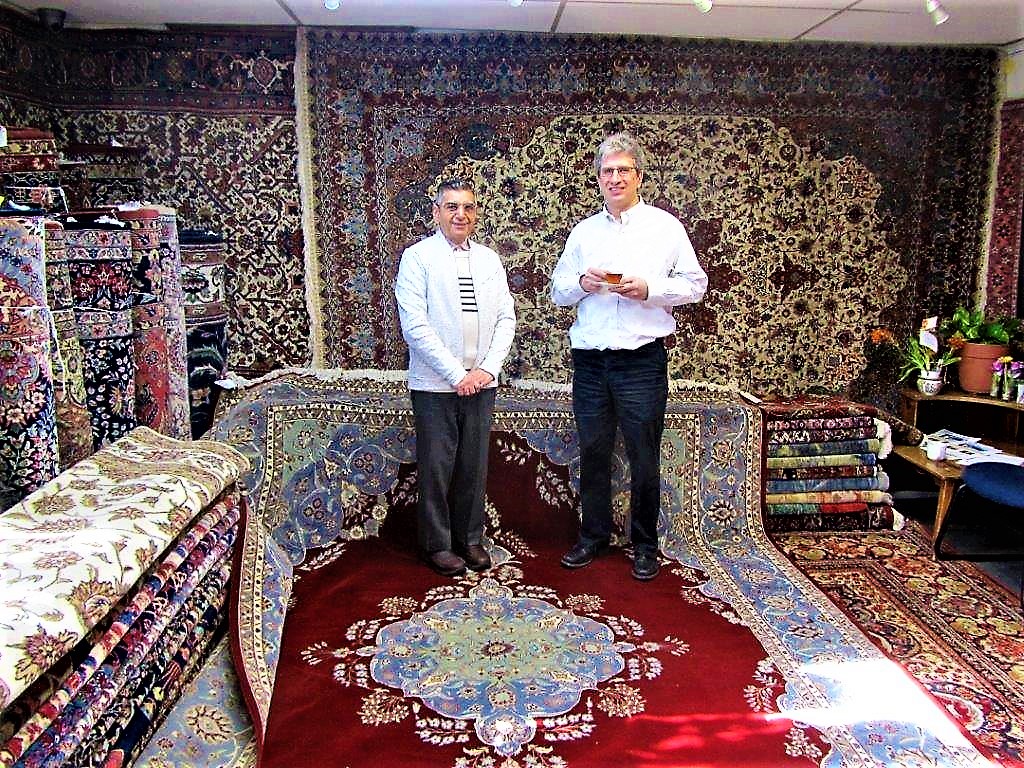
The best way to learn the types is to see them side by side. Browse our Persian and Oriental rugs for sale, sorted by type, or visit our showroom at 769 Concord Ave in Cambridge, where you can turn rugs over, feel the wool and compare them in natural light.
Frequently Asked Questions
What are the main types of Oriental rugs?
By region: Persian, Caucasian, Turkish, Turkmen and Bokhara, Afghan, Indian, Pakistani, and Chinese and Tibetan rugs. By weave: pile rugs and flatweaves such as kilims. By setting: city, village and nomadic rugs.
What is the difference between a Persian rug and an Oriental rug?
A Persian rug is a handmade rug woven in Iran. "Oriental rug" is the wider term for handmade rugs from Asia and the regions around it. Every Persian rug is Oriental, but not every Oriental rug is Persian.
What is an Indo-Persian rug?
A rug woven by hand in India in a classic Persian design, such as an "Indo-Kashan". It is a real handmade rug, but it is Persian-style rather than Persian, and it should be labeled and priced that way.
Which type of Oriental rug is the most durable?
Village and tribal rugs with a thick, good-quality wool pile, such as Heriz, Kazak and many Turkmen rugs, are known for standing up well to everyday use. Good wool matters more than the name.
How can I tell what type of rug I have?
Look at the design, then turn the rug over to see the knots and foundation, and check any label for the country of origin. For a valuable rug, a certified appraisal establishes its type, origin and age.