A Kazak rug is hard to mistake for anything else. Large, bold geometric medallions, strong reds, blues and ivory, a thick, glossy wool pile and a design that reads clearly from across the room: Kazaks are village rugs with real presence. They have been loved by collectors for more than a century, and today the Kazak tradition is woven in several countries, which gives buyers a wide range of rugs to choose from.
This guide explains what a Kazak rug is, where the name comes from, what the designs look like, and what to check before you buy.
Where Kazak rugs come from
Kazak rugs take their name from the area around the town of Qazax (Kazak) in the southern Caucasus, in the borderlands of today's Azerbaijan, Armenia and Georgia. The village weavers of this region produced bold, large-scale geometric designs in strong colors, and Western dealers came to use "Kazak" for the whole group.
The name is not connected with the Kazakh people of Central Asia, though the two are often confused.
The look of a Kazak
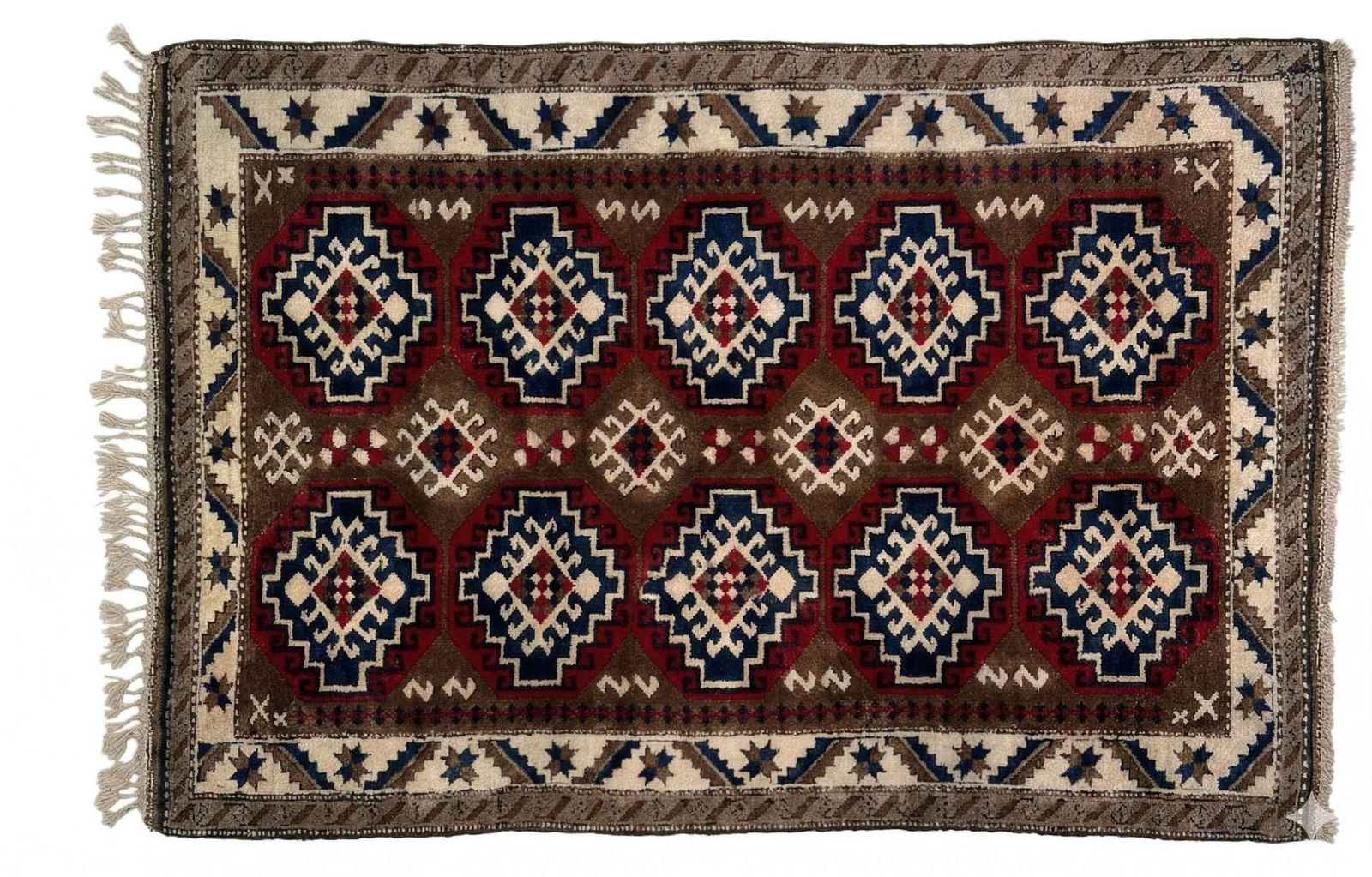
Bold, large-scale geometry. Kazak designs are built from straight lines and angles: large medallions, stepped polygons, stars, hooks and latch-hooked diamonds. A rug may have one, two or three big medallions down its length, or a few large motifs that fill the field. Geometric designs suit a slightly looser village weave, and they give a Kazak its strong, graphic character.
Strong color. Reds, blues and ivory dominate, often with green, gold or brown. The color is used in large blocks, so a Kazak reads clearly from across the room.
A thick, glossy pile. Traditional Kazaks are known for a long, lustrous wool pile, and village weavers often used a wool foundation rather than cotton. That gives an old Kazak a heavy, supple handle.
Small irregularities. Kazaks are village rugs, woven from memory rather than from a drawn pattern. A medallion may be a little larger at one end, a color may change halfway along, or a border may not meet perfectly at the corner. These are part of the rug's character, as we explain in Beautiful "Flaws" in Persian Rugs.
Read how geometric and curving designs differ in our guide to how rugs are classified.
Antique Kazaks and Kazak-style rugs today
Antique Kazaks from the Caucasus, woven in the 19th and early 20th centuries, are among the most collected village rugs. A good antique Kazak in sound condition is scarce, and condition matters as much as age. Some wear is part of its character; moth damage, holes and loose ends need attention.
Kazak-style rugs are woven today in several countries, in the Kazak tradition of bold geometric design. Our Kazak rugs include pieces woven in Turkey and in India in that tradition, and each rug's page states where it was made. A Kazak-style rug woven by hand, with good wool, is a real handmade rug; what matters is that the origin is stated honestly. Our article on how to tell an authentic handmade rug explains the difference between a rug's design and where it was woven. See our Kazak rugs.
What to check before you buy
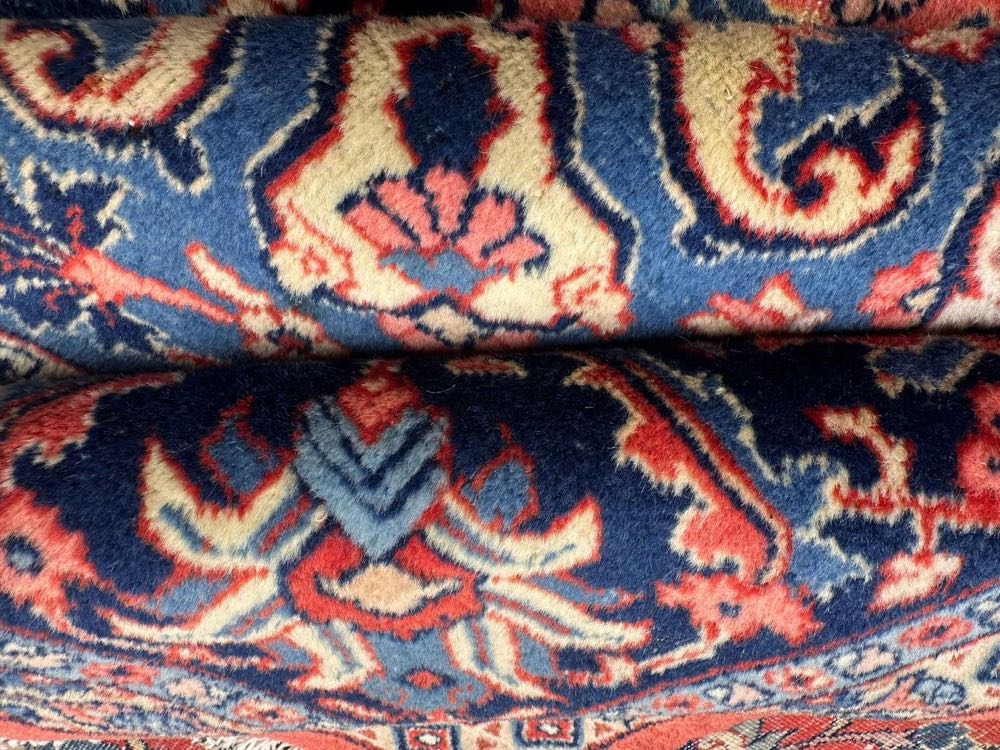
- Turn it over. On a hand-knotted rug, the pattern shows clearly on the back, knot by knot. A canvas or coated backing means it is not hand-knotted.
- Feel the wool. Good wool is soft, springy and lustrous. Harsh or dry wool wears badly.
- Look at the colors. Natural dyes show gentle shifts of shade, called abrash, and age gracefully. Harsh or patchy color can be a sign of synthetic dyes. Read more in our article on natural dyes.
- Check the shape. Village rugs are rarely perfectly square, and a little irregularity is normal. A rug that is badly out of shape or will not lie flat is a different matter.
- Check the ends and sides. On a hand-knotted rug, the fringe is the end of the warp threads, part of the rug's structure; see rug fringe repair.
- Ask about origin, age and materials, and get them in writing. Every rug we sell comes with a certificate of authenticity.
For more on what sets one rug's price apart from another's, see why handmade rugs cost more.
Living with a Kazak rug
Bold geometric designs hide everyday wear well and look at home in family rooms, studies and entryways. They pair easily with plain, modern furniture as well as with wood and leather. Because Kazak designs are large in scale, they also work well in smaller sizes, where a fine floral pattern can look busy: a small Kazak makes a strong statement in an entry, by a fireplace or beside a bed. For help with sizes, see what size rug for each room.
Caring for a Kazak rug
A Kazak's thick wool pile is hard-wearing, but it collects grit. Vacuum regularly without a beater bar on the pile, turn the rug once or twice a year so it wears evenly, and use a rug pad on hard floors. Keep it out of strong, direct sun for long periods. Have it professionally hand washed every 3 to 5 years, with color testing first, as in our 7-step cleaning process. If an older Kazak needs repair, our restoration and repair work uses matching wool, dyes and knots, and a certified appraisal records its origin, age and value in writing.
Frequently Asked Questions
What is a Kazak rug?
A Kazak is a village rug in the tradition of the southern Caucasus, around the town of Qazax, known for bold, large-scale geometric designs, strong reds, blues and ivory, and a thick, glossy wool pile.
Are Kazak rugs Persian?
No. The Kazak tradition comes from the Caucasus, not Iran. Today Kazak-style rugs are also woven in Turkey, India and elsewhere, and each of our rugs' pages states where it was made.
Is a Kazak rug the same as a Kazakh rug?
No. Kazak rugs are named after a town in the southern Caucasus. They are not connected with the Kazakh people of Central Asia, though the names are often confused.
Are Kazak rugs good for busy rooms?
Yes. Their bold geometric designs and thick wool pile hide everyday wear well, which makes them a good choice for family rooms, studies and entryways.
Are antique Kazak rugs valuable?
A good antique Kazak in sound condition is scarce and valued by collectors, and condition matters as much as age. A certified appraisal establishes a rug's origin, age and value in writing.