Two rugs of the same size can sit side by side in a showroom and differ in price many times over. From across the room, they may even look alike. The difference is in how they were made: by whom, from what, how finely, and how long ago. Once you know what to look for, the price of a handmade rug starts to make sense, and you can tell whether a rug is good value for what it is.
This guide walks through what makes a handmade Persian or Oriental rug cost more, and how to judge value when you buy.
1. Time: every knot is tied by hand
The biggest cost in a hand-knotted rug is time. A weaver ties each knot of pile by hand around the foundation threads, row after row, and cuts it to length. A room-size rug contains hundreds of thousands of knots, often more than a million in a fine piece, and a large or finely knotted rug can take a weaver, or a small team of weavers, many months to finish.
A machine-made rug of the same size can be produced in hours. A hand-tufted rug, punched with a tufting gun into a canvas backing, takes days. That difference in labor is the first and largest reason a handmade rug costs more. Our guide to Persian and Oriental rugs explains how rugs are woven, step by step.
2. Knot density: how finely it is woven
Knot density is the number of knots in a given area, often counted per square inch. A higher density takes longer to weave and lets the weaver draw finer detail: smooth curves, small flowers and complex medallions. A lower density gives a bolder, more geometric design, which is typical of village and tribal rugs.
Higher density is not always better. A finely knotted city rug and a boldly drawn tribal rug are different kinds of art, and each has its own value. But for two rugs of the same type and size, the more finely knotted one has taken more work, and is usually priced higher.
3. Materials: wool, silk and dyes
Wool. The best rugs use wool from sheep raised in the highlands, where the cold climate produces a long, lanolin-rich fleece that is soft, strong and naturally resistant to dirt. That wool is hand-spun, which gives the pile its living surface. Our article on mountain wool explains why it matters.
Silk. Silk is finer than wool, so it can carry the smallest details, and it shines in a way wool does not. Silk rugs, and wool rugs with silk highlights, cost more because the material is more expensive and the fine weaving takes longer.
Dyes. Natural dyes made from plants, roots and insects are dyed in small batches by skilled dyers. They give a depth of color that ages gracefully, and the gentle variation of shade called abrash. Read more in our article on natural dyes.
4. Size
Size multiplies everything above. A rug twice as long and twice as wide has four times as many knots. That is why a room-size rug of a given quality costs much more than a small rug or a runner of the same quality.
5. Age and condition
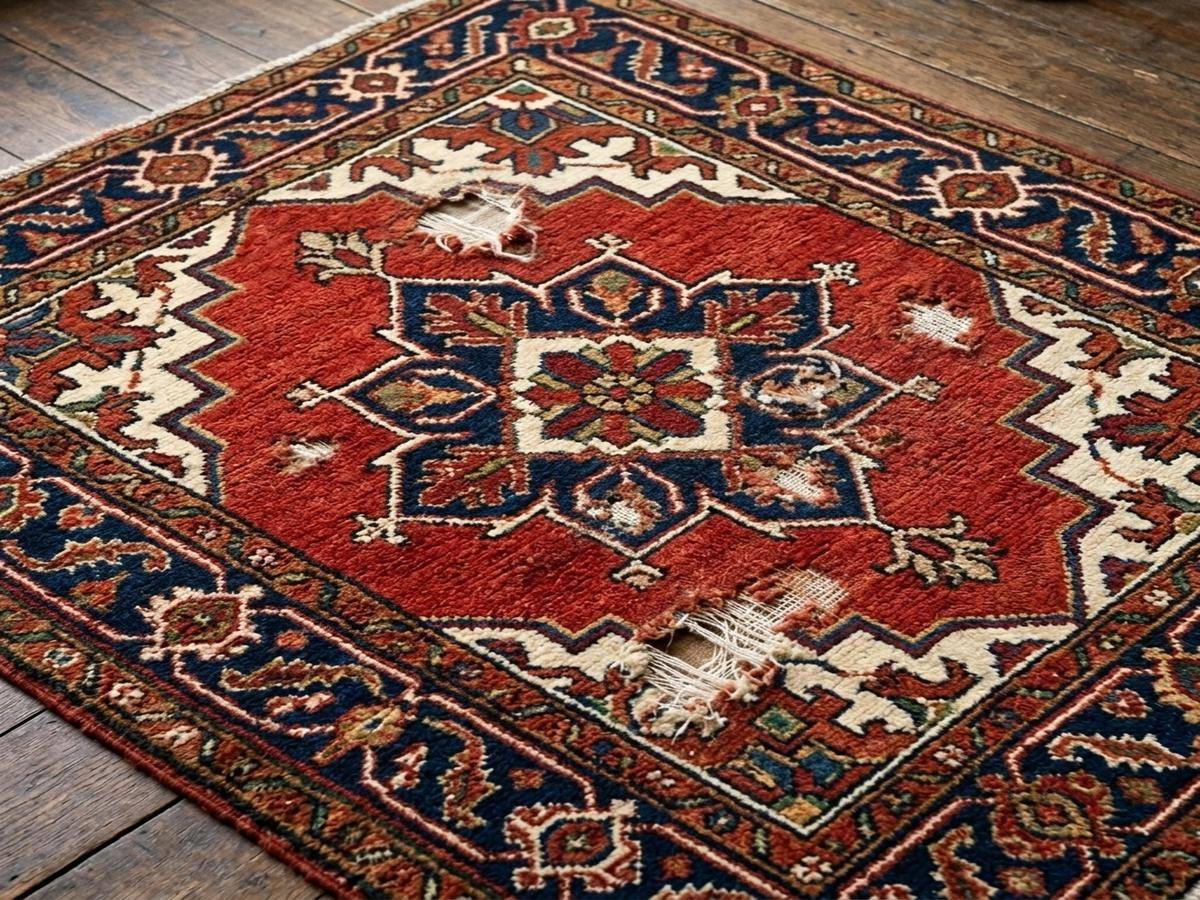
A good antique rug is scarce: no more of them will ever be made. Age is of high value in old rugs, and an antique in good condition, with its original pile, ends and sides intact, commands a premium. Condition matters as much as age. Worn pile, moth damage, holes, missing fringe and faded or run colors all reduce value, which is why a careful restoration, done with matching wool, dyes and knots, protects a rug's worth. Small irregularities woven in by the weaver are different: they are part of a handmade rug's character, as we explain in Beautiful "Flaws" in Persian Rugs.
6. Origin and design
Where a rug was woven matters. Rugs from the great weaving centers of Iran, such as Tabriz, Kashan, Isfahan and Nain, are known for their quality and their designs. Many classic Persian designs are also woven in other countries today. A rug woven in India in a Kashan design is a real handmade rug, but it is Persian-style rather than Persian, and it is priced differently. A trustworthy seller always states the country of origin. Our article on how to tell an authentic handmade rug explains the difference, and our pages on Tabriz, Kashan and other Persian rugs show what we have in stock.
How to judge value when you buy
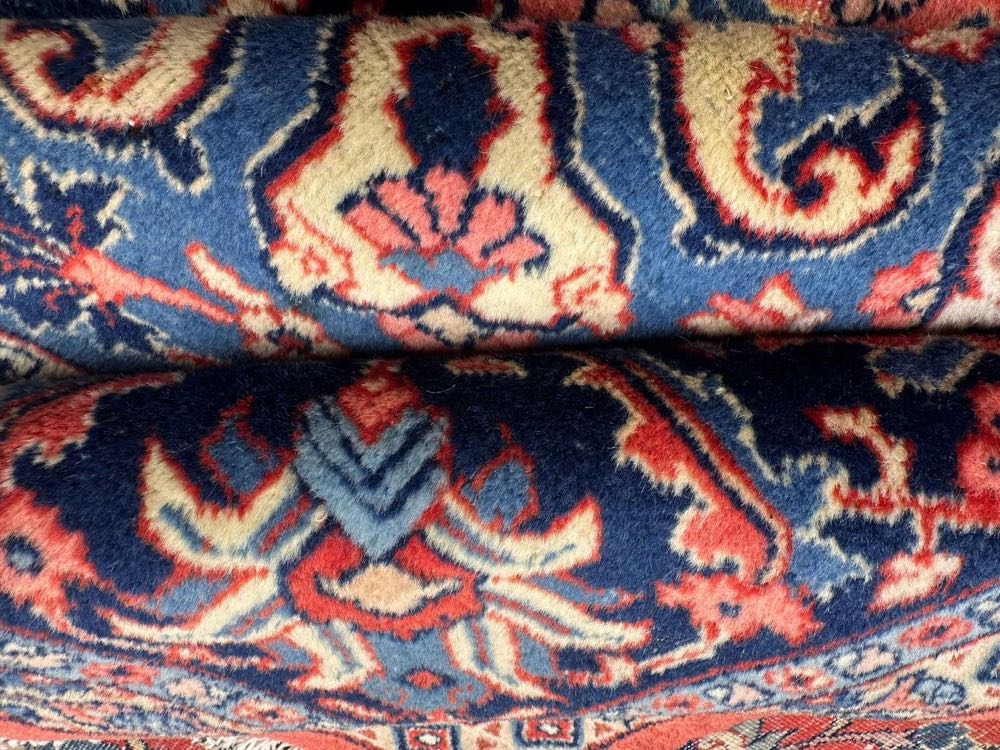
- Turn the rug over. On a hand-knotted rug, the pattern shows clearly on the back, knot by knot. A canvas or coated backing means it is not hand-knotted.
- Look at the fringe. On a hand-knotted rug, it is the end of the warp threads, not a strip sewn on.
- Feel the wool. Good wool is soft and springy, not harsh or slippery.
- Ask about origin, age, materials and condition, and get them in writing. Every rug we sell comes with a certificate of authenticity.
- Compare like with like. Compare a rug with others of the same type, size and age, not with a machine-made rug that only looks similar.
- See it in person. Colors and texture are hard to judge from a photo.
A handmade rug that is well made and well cared for lasts for generations. A cheaper machine-made rug may need replacing in a few years. Judged over its life, a good handmade rug is often the better value.
Find a rug in our Cambridge showroom
Browse our Persian and Oriental rugs for sale. Each rug's page lists its origin, size, materials and condition, and you are welcome to see any of them in natural light at our showroom at 769 Concord Ave in Cambridge. We offer a free 3-day in-home trial and a lifetime trade-in, so you can see a rug in your own room before you decide.
Frequently Asked Questions
Why are Persian rugs so expensive?
A hand-knotted Persian rug is tied knot by knot by hand, often over many months, using hand-spun wool and natural dyes. The price reflects that labor, the materials, the knot density, the size, and, for older rugs, age and condition.
What is the difference between hand-knotted and machine-made rugs?
A hand-knotted rug is tied by hand knot by knot, and its pattern shows clearly on the back. A machine-made rug is produced in hours, with a uniform back and often a fringe sewn on. Our article on how to tell an authentic handmade rug explains the checks.
Does a higher knot count mean a better rug?
A higher knot density means more work and finer detail, but it is not the only measure of quality. A boldly drawn tribal rug and a finely knotted city rug are different kinds of art, each with its own value.
Are antique rugs worth more than new ones?
A good antique in sound condition is usually worth more, because it is scarce. Condition matters as much as age: damage and wear reduce value, and careful restoration helps protect it.
Can I try a rug at home before buying?
Yes. We offer a free 3-day in-home trial, and every rug comes with a certificate of authenticity and a lifetime trade-in.