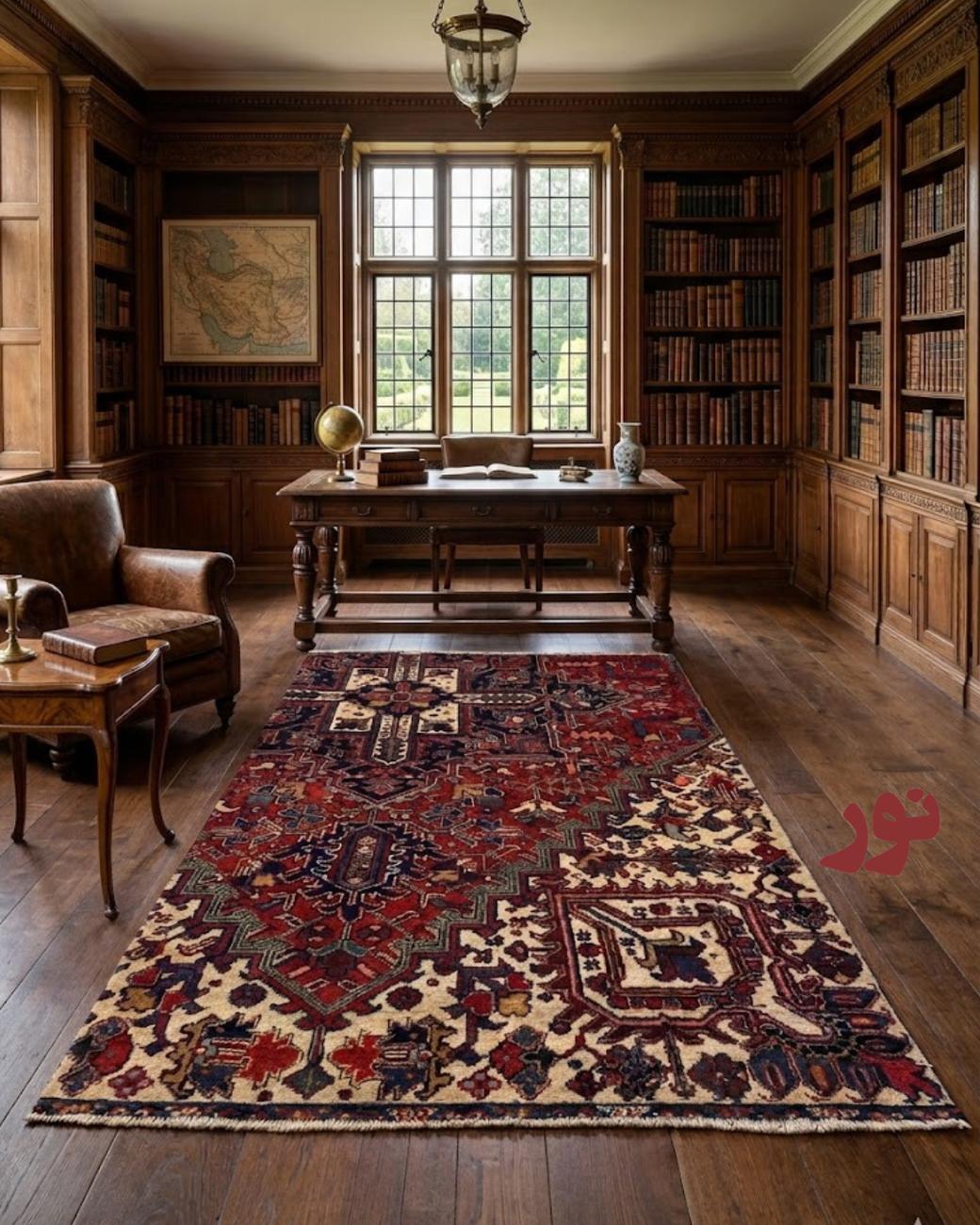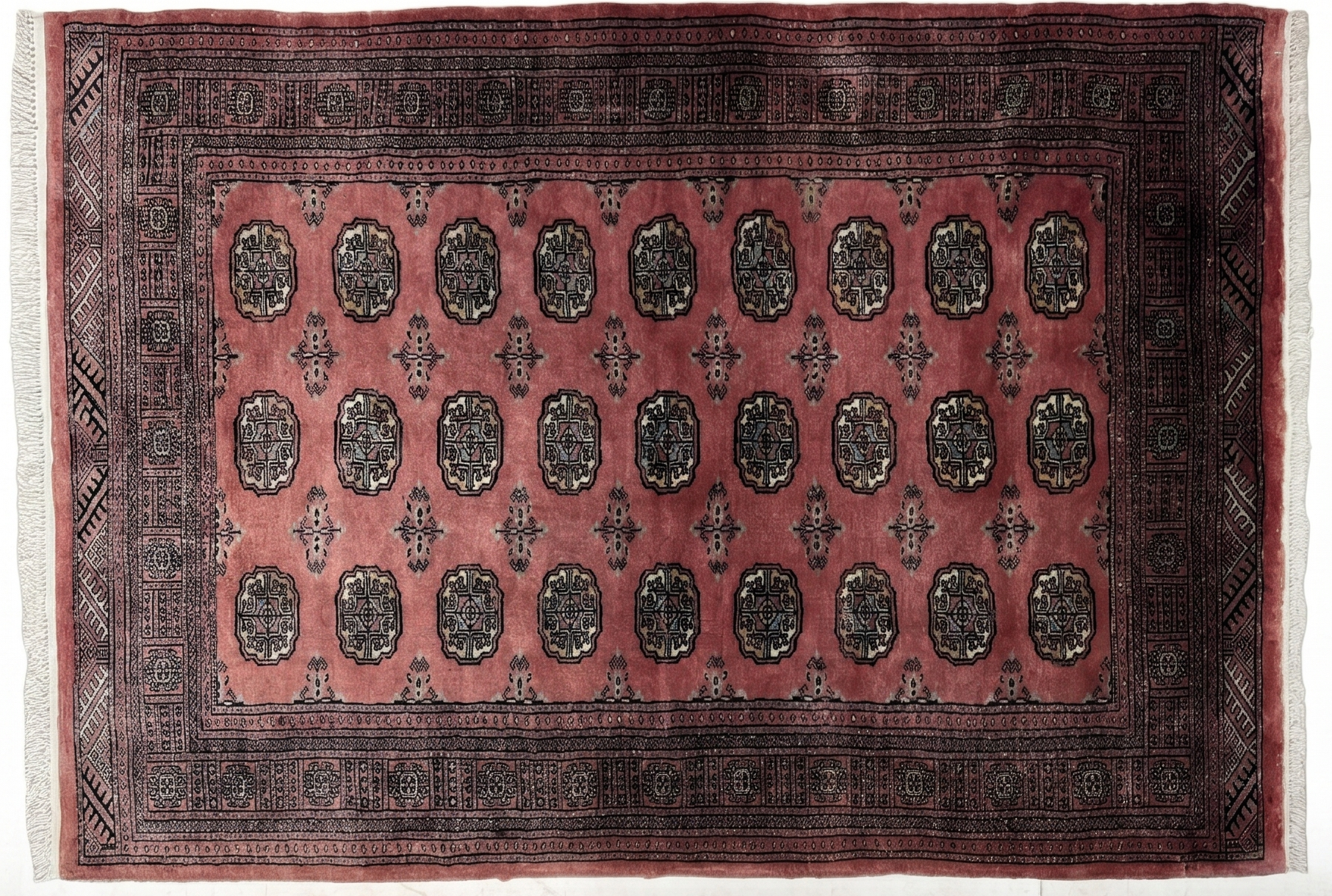
The most common mistake people make with a rug is buying one that is too small. A small rug floating in the middle of a room makes the room look smaller and the furniture look scattered. The right size pulls the furniture together and gives the room a center. The good news is that a few simple rules cover almost every room.
This guide explains what size rug to choose for each room, the standard sizes handmade rugs come in, and how to measure before you buy.
Start with the room, not the rug
Measure the room, then measure the area you want the rug to cover: usually the furniture group, not the whole floor. Then mark the rug's outline on the floor with painter's tape and live with it for a day. It is the quickest way to see what a size really looks like, and it often shows that the rug you had in mind is too small.
A good general rule is to leave a band of bare floor around the rug, roughly 12 to 18 inches in most rooms, a little less in a small room and more in a very large one. The rug should feel like part of the room, not wall-to-wall carpet.
Living room
In a living room, the rug should be large enough for at least the front legs of the sofa and chairs to sit on it. That ties the seating together into one group.
- All legs on the rug: the most generous look, and the best in a large or open-plan room. It needs a rug big enough to hold the whole seating group.
- Front legs on the rug: the most common choice, and it works in most rooms.
- Coffee table only: a small rug under the coffee table, with all the furniture off it, usually looks too small. Choose this only in a very small room, and then choose a rug at least as wide as the sofa.
8 x 10 and 9 x 12 feet are the usual living-room sizes. In an open-plan room, a rug can also mark out the sitting area from the rest of the space.
Dining room
Under a dining table, the rug should reach about 24 inches beyond the table on every side, so the chairs stay on the rug when they are pulled out. A rug that is too small catches the back legs of the chairs every time someone sits down, which is annoying and wears the edge of the rug.
Match the shape to the table: a rectangular rug for a rectangular table, and a square or round rug for a round table, if you can find one. For a table that seats six, a rug of about 8 x 10 feet is common; a larger table that seats eight or more often needs 9 x 12 feet or more. Measure your own table with its chairs pulled out to be sure.
Dining rooms see spills, so a wool pile and a design with an all-over pattern are forgiving. A wool rug can handle a spill if it is blotted quickly; see pet stains on Oriental rugs for the same first aid that works for food and drink.
Bedroom
There are two good ways to dress a bed:
- One large rug under the bed, under the lower two-thirds of the bed, leaving the bedside tables off the rug. The rug should extend well beyond the sides of the bed, so your feet land on it when you get up. For a queen or king bed, that usually means a rug of 8 x 10 or 9 x 12 feet.
- A smaller rug or runner on each side of the bed, or one across the foot of it. This works well in a smaller room or with a bed that sits close to the walls.
Bedrooms are quiet rooms, so they are a good place for a finer or more delicate rug, or an antique that you want to keep out of heavy traffic.
Hallways, stairs and kitchens
Hallways and stairs take a runner, usually 2 to 3 feet wide. Choose the length so a few inches of bare floor show at each end, and leave space for doors to open over the rug. In a long hallway, two runners of the same type can work better than one very long one. See our Persian and Oriental rug runners for runners in stock.
Runners and kitchen rugs take more foot traffic than any other rug in the house, so a durable wool pile and a well-secured fringe matter. Turn them end to end once or twice a year so they wear evenly; see our guide to rug fringe repair for why the ends need care.
Entryways
An entry rug should be at least as wide as the door, ideally a little wider, and should not catch when the door opens. Entryways take grit from shoes, and in a New England winter, salt and slush, so vacuum the rug often and plan for it to need washing sooner than a rug in a quiet room; see how often to clean a Persian rug.
Standard handmade rug sizes
Handmade rugs come in traditional sizes, close to these:
- 2 x 3 to 3 x 5 feet: entryways, by a door, beside a bed, a small accent.
- 4 x 6 feet: small rooms, entries, beside a bed, a reading corner.
- 5 x 8 to 6 x 9 feet: small living rooms, bedrooms, under a small table.
- 8 x 10 feet: living rooms, dining rooms, under a queen bed.
- 9 x 12 feet: larger living and dining rooms, under a king bed.
- 10 x 14 feet and larger: large and open-plan rooms.
- 2 x 6 to 3 x 16 feet and longer: runners for hallways, stairs and kitchens.
Handmade rugs vary a few inches from their stated size, and the two ends of a rug can differ slightly, so allow a little room when you measure. Measure a rug without its fringe.
Two more things to check
Door clearance. Measure the gap under any door that will open over the rug, especially with a thick pile and a rug pad underneath.
The rug pad. Plan for a pad under any rug on a hard floor. It should be trimmed about an inch short of the rug on each side so it does not show; see our guide to rug pads for hardwood floors.
See a rug in your own room
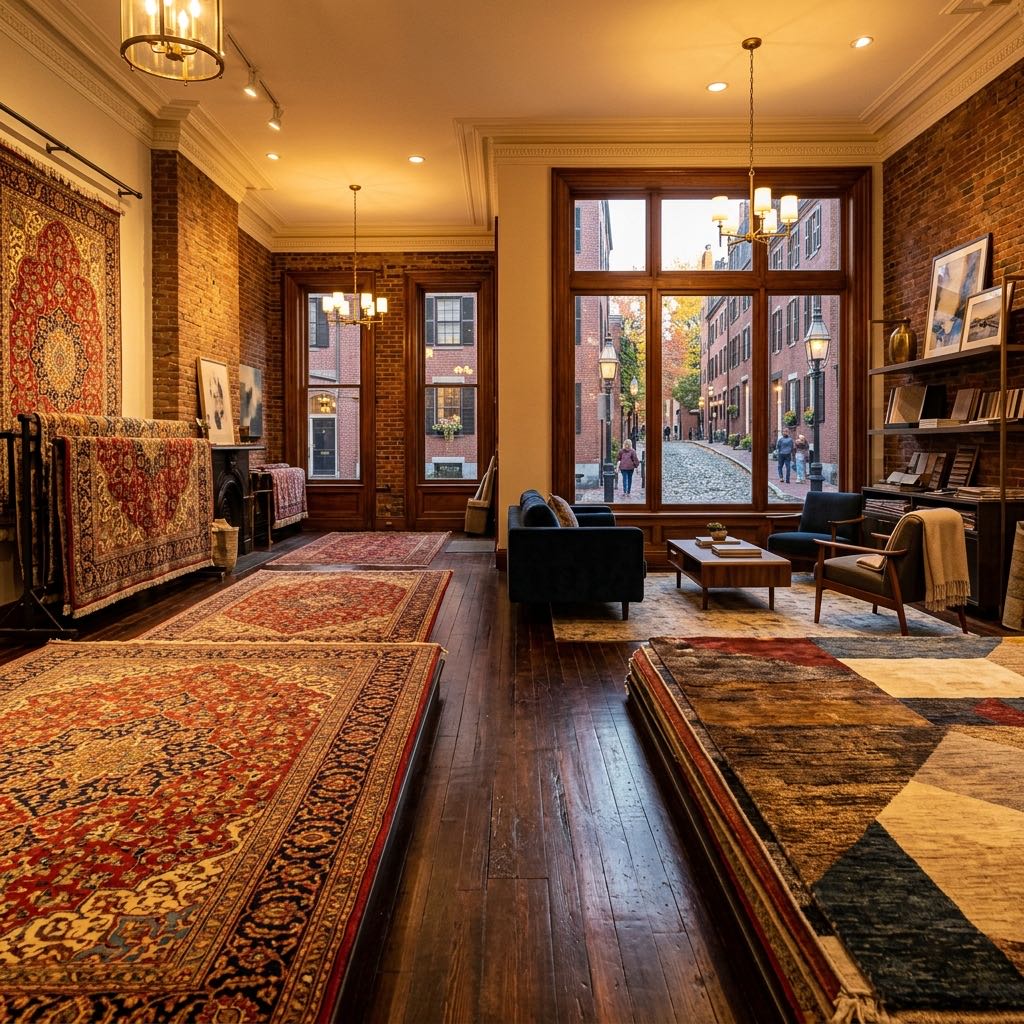
Sizes are easier to judge in person than on paper. Browse our Persian and Oriental rugs for sale: each rug's page lists its size. You are welcome to see any rug at our showroom at 769 Concord Ave in Cambridge, and our free 3-day in-home trial lets you see a rug in your own room, at its real size, before you decide. For more on choosing a rug, see why handmade rugs cost more and our guide to Persian and Oriental rugs.
Frequently Asked Questions
What size rug should go in a living room?
Choose a rug large enough for at least the front legs of the sofa and chairs to sit on it, with roughly 12 to 18 inches of bare floor around the edges. 8 x 10 and 9 x 12 feet are the usual living-room sizes.
How big should a rug be under a dining table?
The rug should reach about 24 inches beyond the table on every side, so the chairs stay on the rug when they are pulled out. Measure the table with its chairs pulled out to check.
What size rug goes under a queen or king bed?
Usually 8 x 10 feet for a queen and 9 x 12 feet for a king, placed under the lower two-thirds of the bed so the rug extends beyond the sides. A runner on each side of the bed is a good alternative in a smaller room.
Is it better for a rug to be too big or too small?
Slightly too big is almost always better. A rug that is too small makes a room look smaller and leaves furniture looking scattered. Leave a band of bare floor around the edges so the rug does not look like wall-to-wall carpet.
Can I try a rug in my room before I buy it?
Yes. We offer a free 3-day in-home trial, so you can see a rug in your own room at its real size. Mark the outline with painter's tape first to narrow down the size.